
Energy for companies, explained simply
At BeLoaded we believe the future of energy is flexible, efficient and sustainable. Here you find practical guides, real project examples and market analysis on load balancing, batteries, EV charging and solar power.
In short
In short
The BeLoaded knowledge hub explains energy for Belgian companies in plain words. What is the capacity tariff? When does a company battery pay off? How do you add charge points without a bigger grid connection? How do day-ahead prices work? Everything is written by the BeLoaded team in Antwerp, using what we see on real projects.
- Guides that each answer one practical question
- A glossary of 26 energy terms in plain language
- Today's electricity price and blog analyses of the Belgian market
Guides: answers to common questions
Each guide starts with a short answer, then explains the details with examples from Belgian sites.
Capacity tariff explained: how Belgian companies pay for peaks
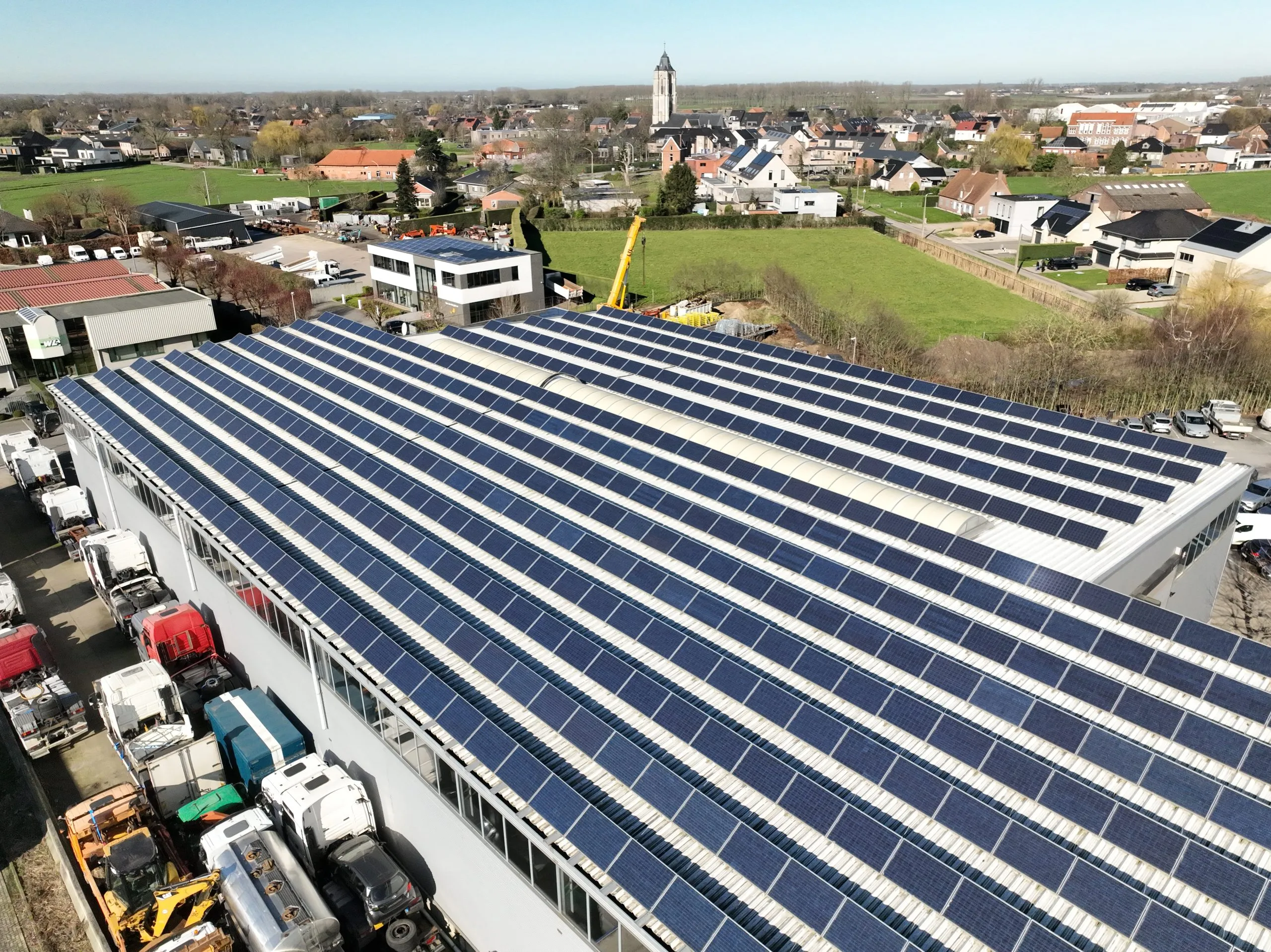
The capacity tariff is the part of your Belgian grid costs based on your highest 15-minute power peak, not on how many kWh you use. In Flanders every company pays it since 2023; in 2026 Wallonia and Brussels only charge peaks for larger connections. Spreading loads, smart EV charging, a battery and an energy management system can all lower that peak.
Is a business battery worth it? An honest guide for companies
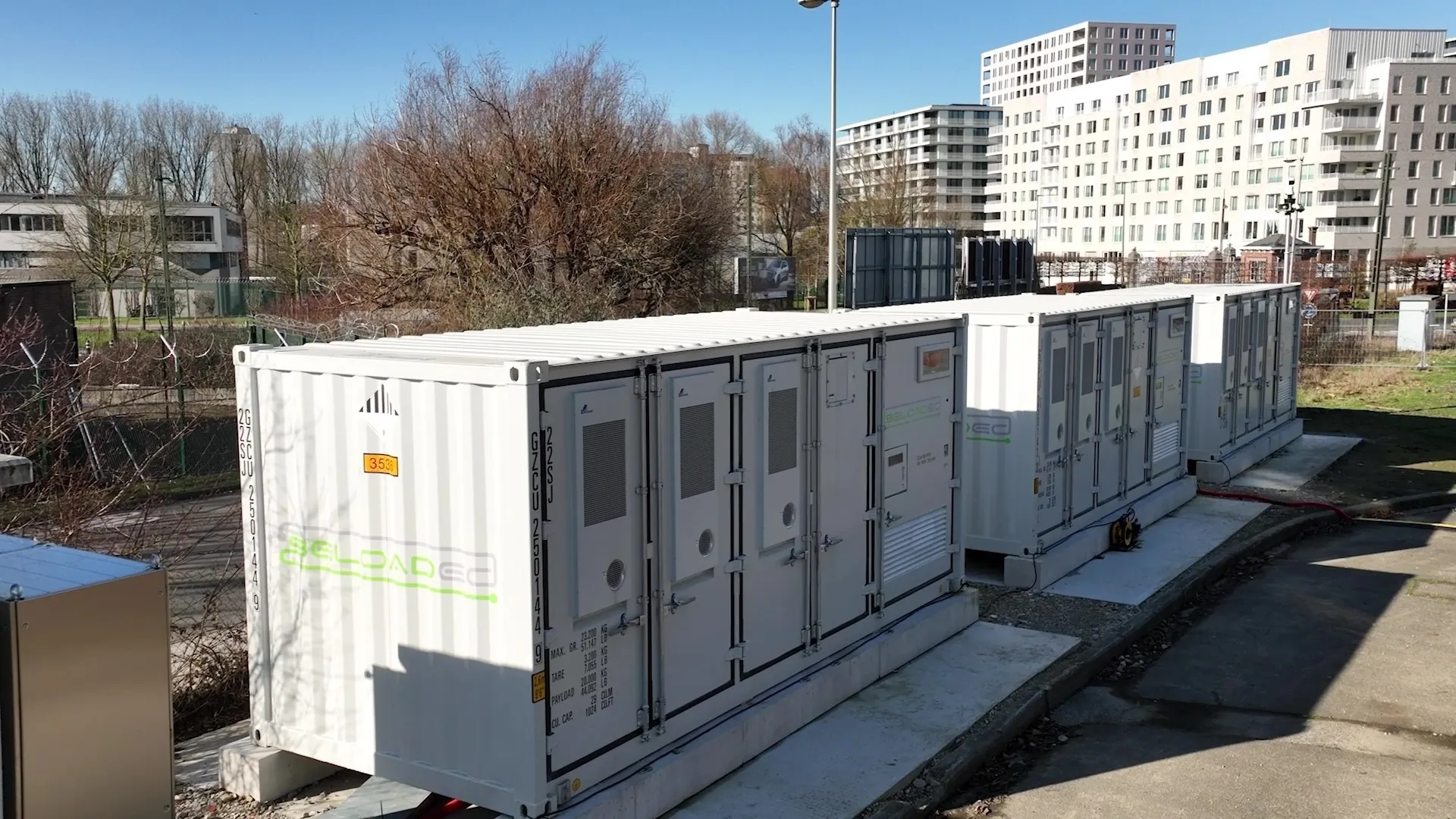
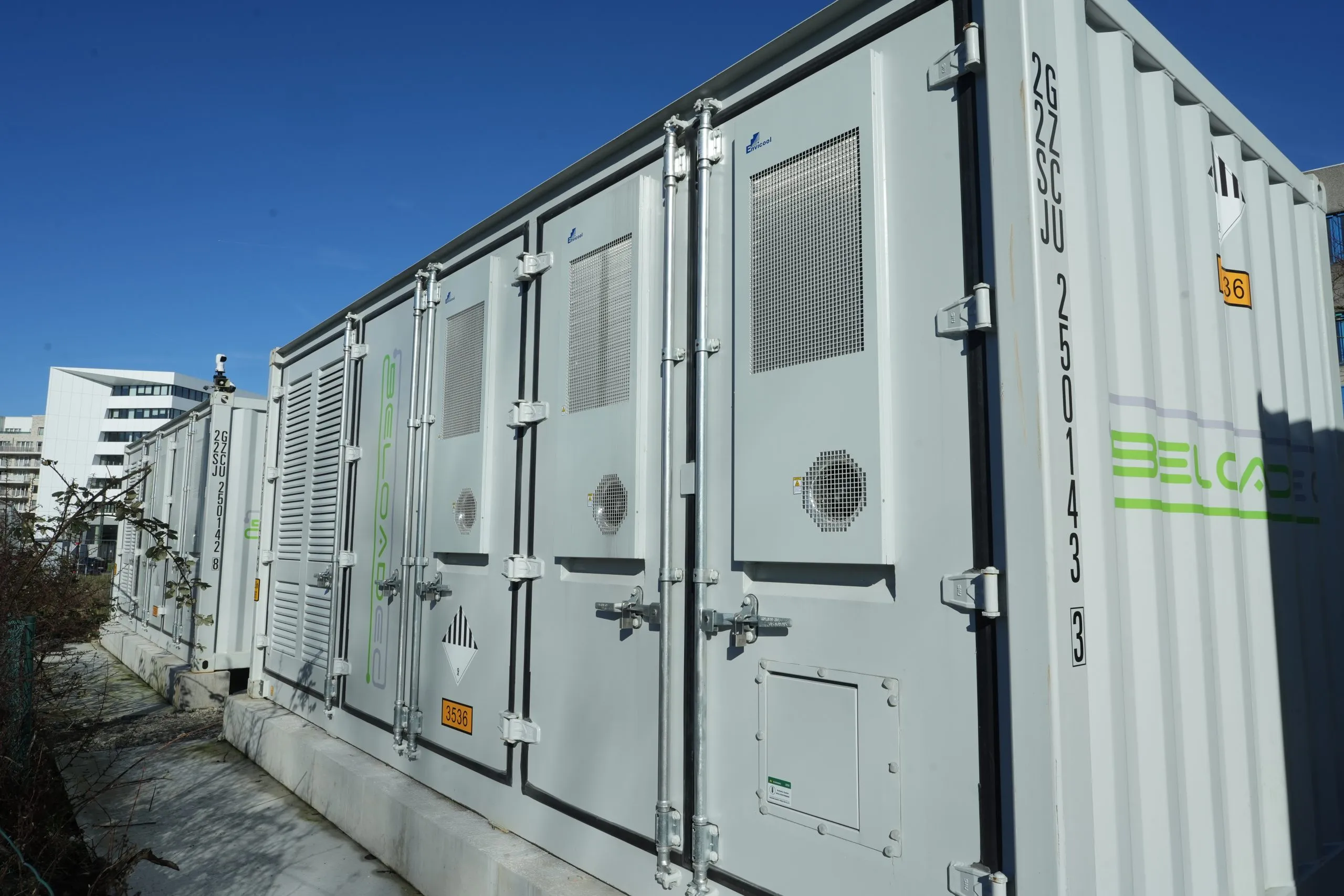
A business battery in Belgium is worth it when it can earn from several sources at once: lowering your capacity tariff, storing your own solar power, buying cheap power for expensive hours and offering flexibility to the grid. With only one of these, the business case is often weak. Measure your profile first, simulate second, invest third.
More EV chargers without a grid upgrade: how load balancing works
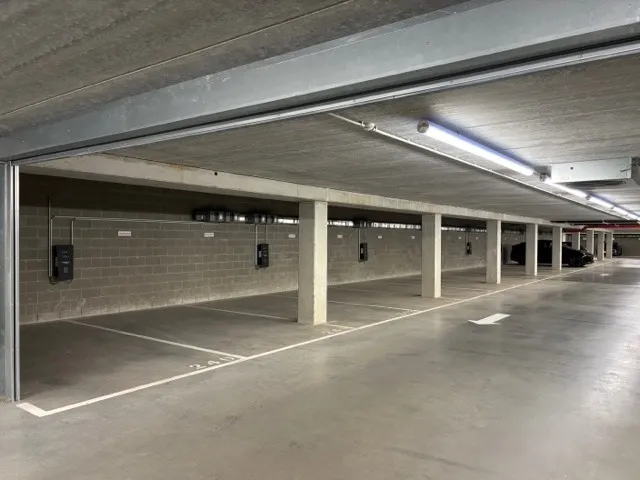
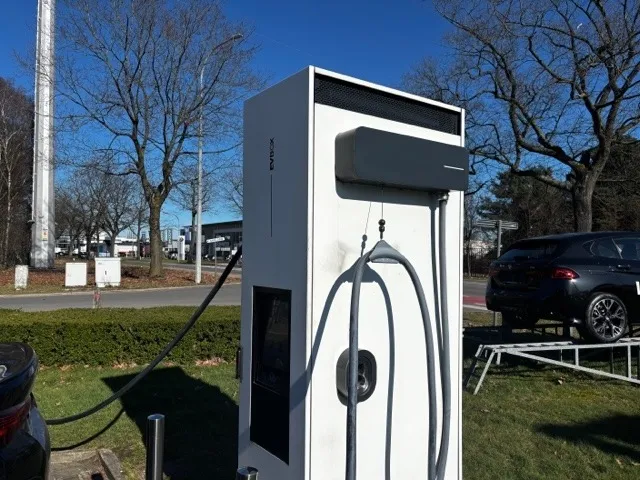
Most Belgian companies can add many more EV charge points without a heavier grid connection. Dynamic load balancing shares the power that is left on your connection across all chargers in real time, and a battery can add extra power when the grid cannot. BeLoaded runs 112 balanced chargers in one Brussels car park and raised a logistics site from 90 kW to almost 600 kW of available power.
Dynamic energy contract for businesses: how it works in Belgium
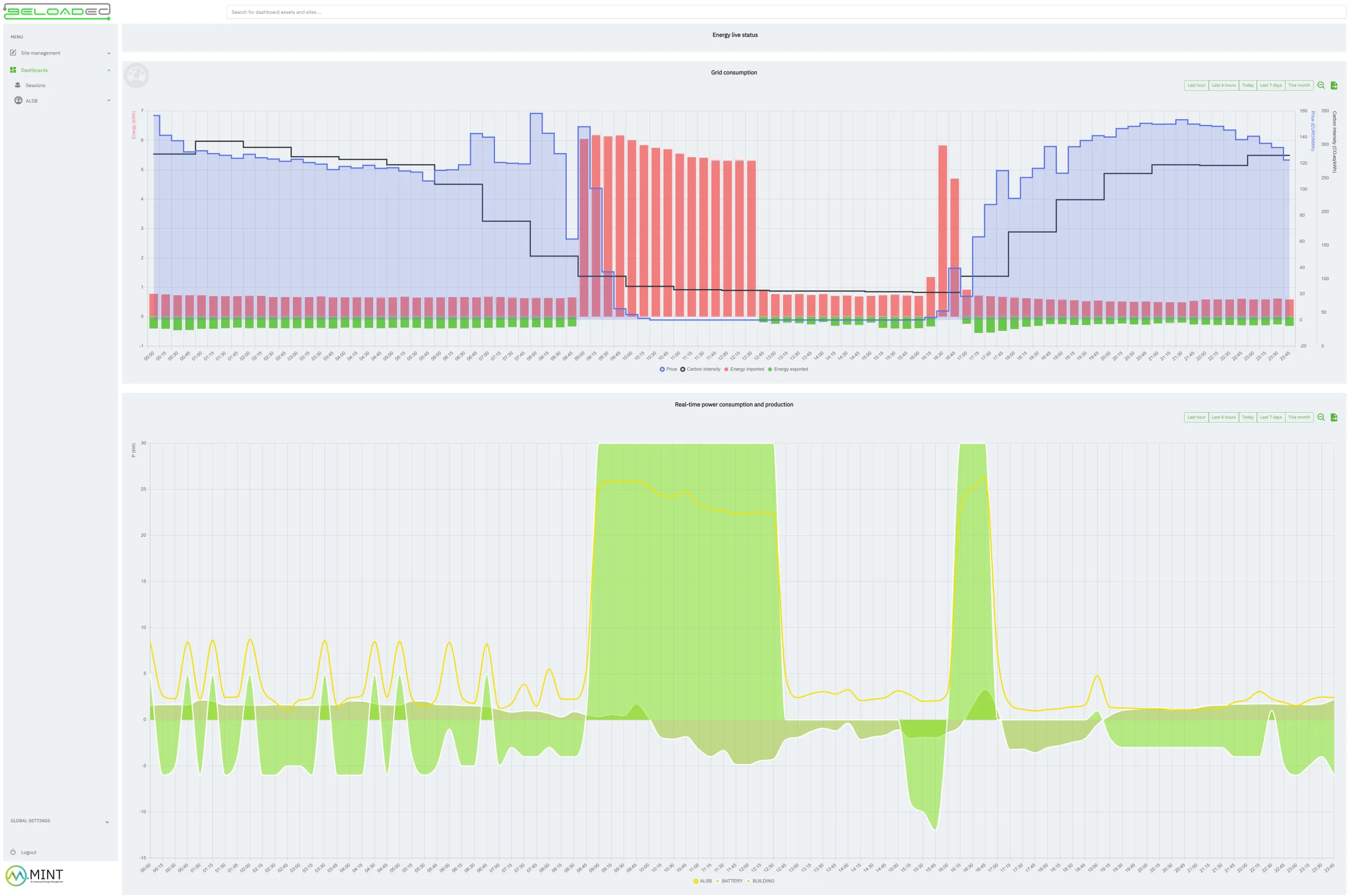
With a dynamic energy contract, your company pays a price that follows the Belgian day-ahead market, which sets a new price for every quarter-hour since 1 October 2025. It pays off when you can move consumption to cheap hours, and it can cost more if you mostly use power in the expensive evening. A battery and an energy management system make that shifting automatic.
Negative electricity prices in Belgium: causes and what to do
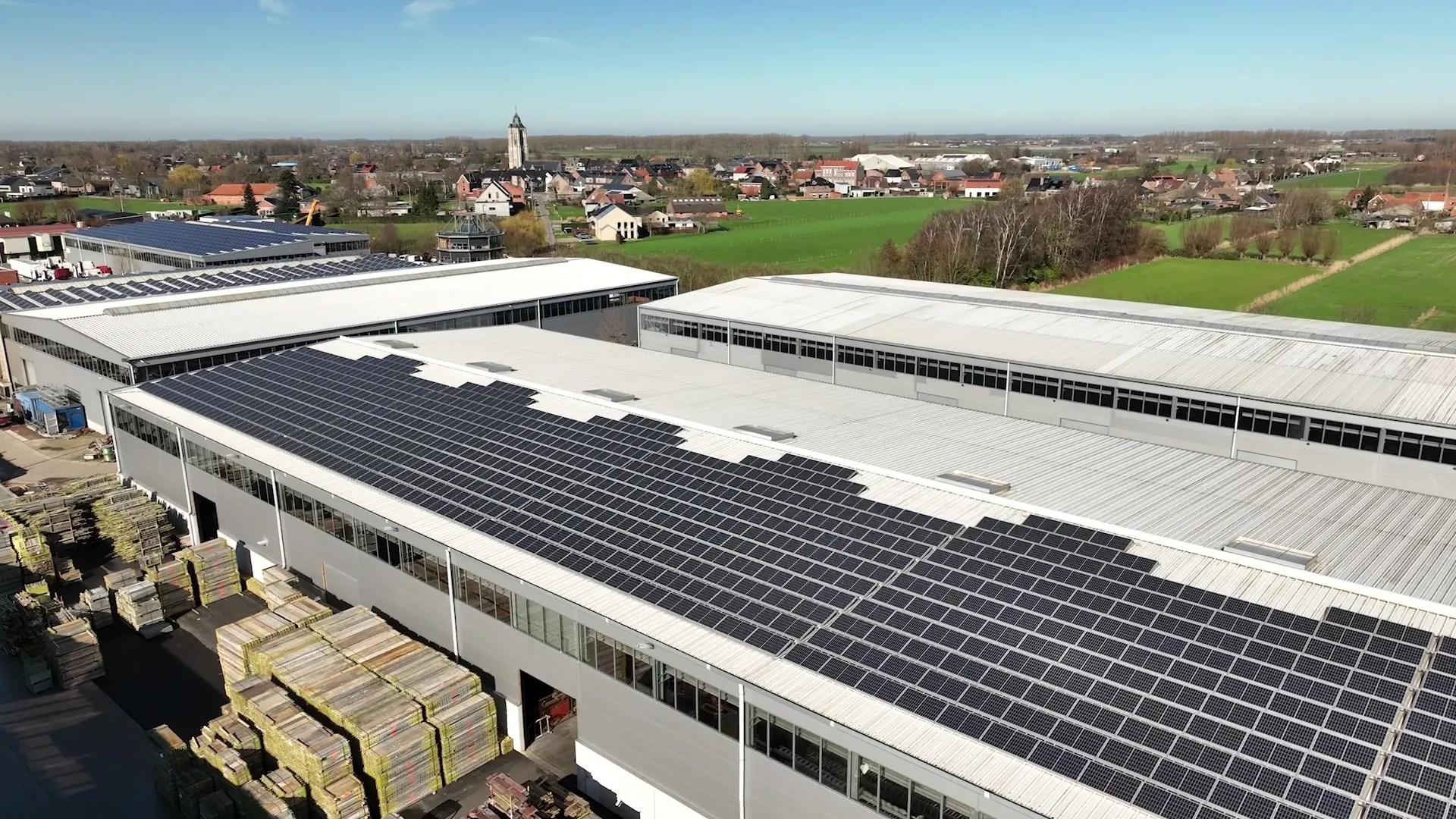
Negative electricity prices are quarter-hours on the Belgian day-ahead market when there is so much power, mostly from solar, that producers pay to inject. Belgium counted more than 520 negative hours in 2025, according to the regulator CREG. Companies can limit the cost by curtailing solar injection, and turn it into value by shifting consumption or storing energy in a battery.
Buy, lease or Battery as a Service: which suits your company?
A Belgian company can buy a battery, finance it through a lease or loan, or use Battery as a Service (BaaS). Buying gives you all the value and all the risk. Leasing spreads the cost but leaves the risk with you. With BaaS you pay no upfront investment and the provider installs, operates and maintains the battery, in exchange for a recurring fee and, depending on the concept, a share of the revenues.
Battery permits and fire safety in Belgium: what you need
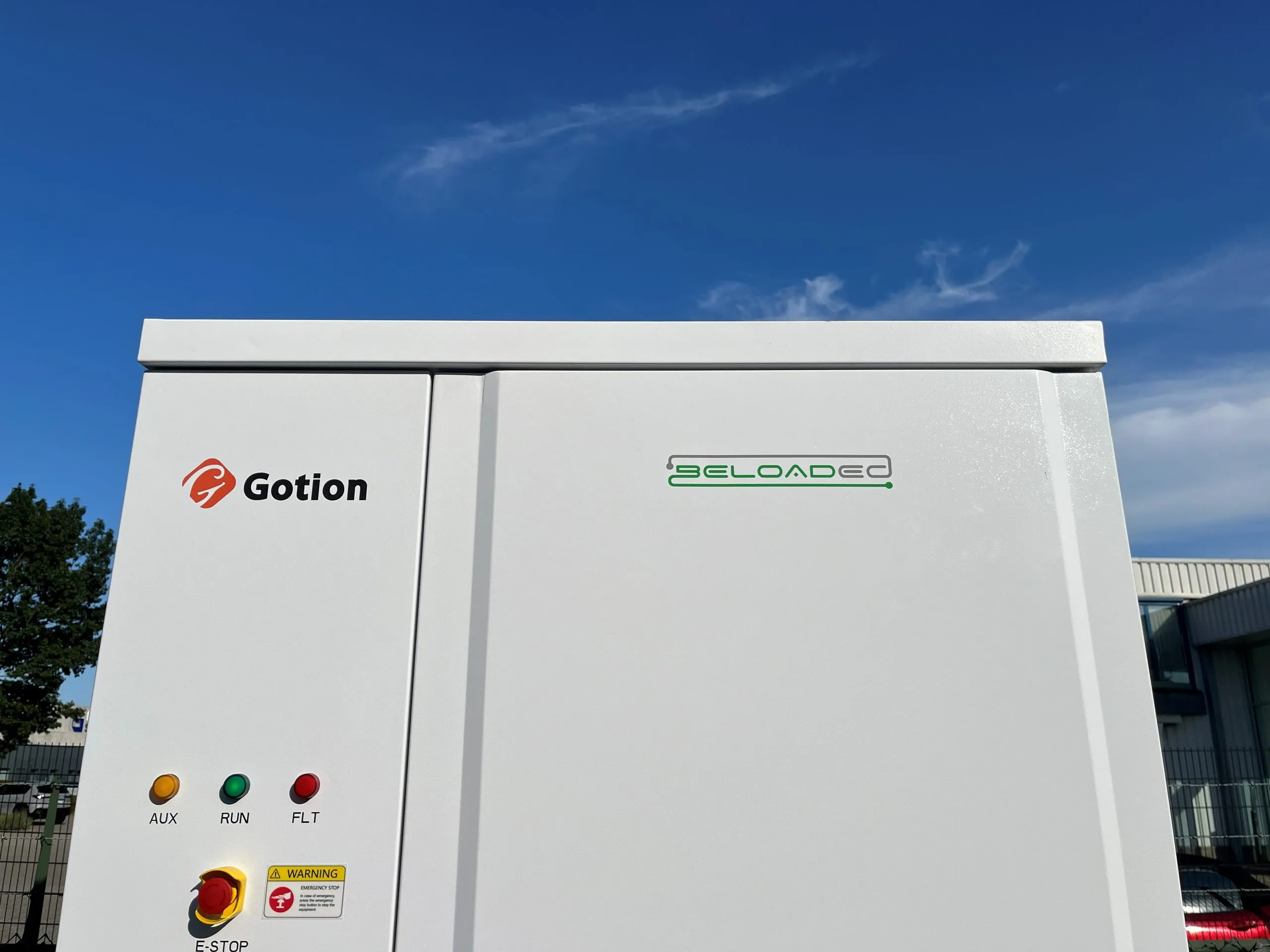
A company battery in Belgium needs an electrical inspection under the AREI, notification to and approval from the grid operator, and a fire safety approach agreed with the fire service and your insurer. The environmental rules differ by region: in Flanders batteries are not a VLAREM-classified activity, while Brussels and Wallonia classify stationary batteries above roughly 10 kWh. In Flanders, sites with 250 kVA or more of storage must also accept telecontrol by the grid operator.
Business battery vs home battery: what is the difference?
A home battery stores a few to around 20 kWh behind a household meter, mainly to use your own solar power in the evening. A business battery ranges from tens of kWh to several MWh, is steered by an energy management system and can lower grid costs, enable more EV chargers and earn money on energy markets. It also comes with more rules: a grid study, telecontrol from 250 kVA in Flanders and, in Brussels and Wallonia, environmental classification above about 10 kWh.
Energy glossary
The terms you meet most, in one line each. See the full glossary for all 26 terms, from capacity tariff to vehicle-to-grid.
- aFRR (automatic Frequency Restoration Reserve)
- aFRR (automatic Frequency Restoration Reserve) is a balancing reserve where Elia sends automatic set-points every few seconds to restore the grid balance, with full delivery within 5 minutes.
- Aggregator
- An aggregator bundles the flexibility of many batteries, EV chargers and flexible loads into one pool and sells it on energy and balancing markets, such as Elia's aFRR.
- Ancillary services
- Ancillary services are services that grid operator Elia buys to keep the Belgian grid stable, such as balancing reserves (FCR, aFRR, mFRR), voltage control and black start.
- Balancing responsible party (BRP)
- A balancing responsible party (BRP) is a company that must keep injection and offtake in its Belgian portfolio balanced every quarter-hour and settles any imbalance with Elia.
- Battery energy storage system (BESS)
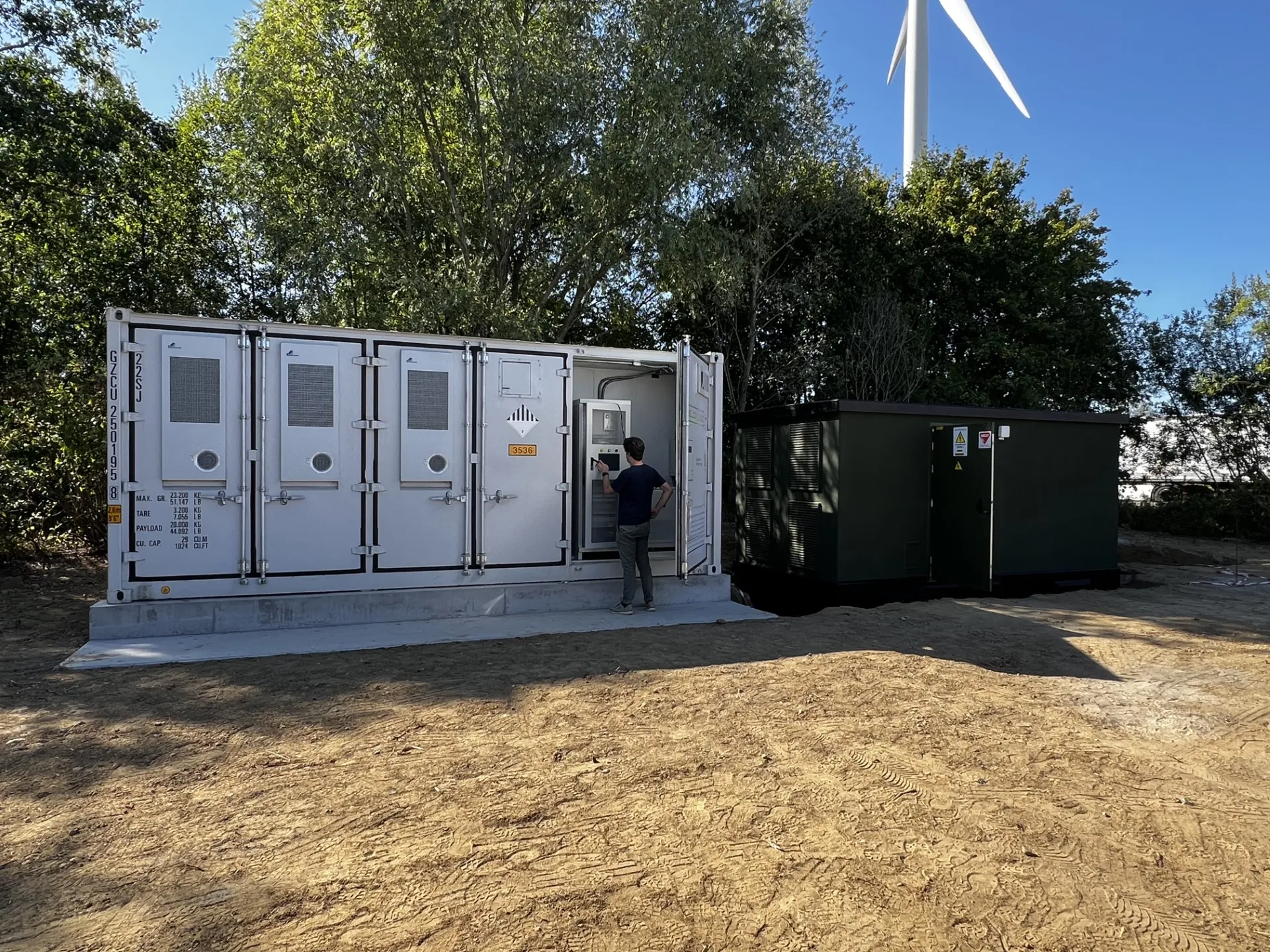
- A battery energy storage system (BESS) is a company-scale battery with inverter and controls that stores electricity when it is cheap or plentiful and releases it when needed.
- Capacity tariff
- The capacity tariff is the part of your network costs in Flanders based on your highest 15-minute power peak each month, not only on the kWh you use.
- Day-ahead market
- The day-ahead market is the daily auction where electricity for each 15-minute period of the next day is bought and sold, setting the Belgian day-ahead price that dynamic contracts follow.
- Dynamic energy contract
- A dynamic energy contract is an electricity contract where the energy price changes every hour or quarter-hour, following the Belgian day-ahead market price.
- Energy arbitrage
- Energy arbitrage means storing electricity when it is cheap and using or selling it when it is expensive, usually with a battery, to earn from price differences.
- Energy management system (EMS)
- An energy management system (EMS) is software that measures and steers your solar panels, battery, charge points and other loads together, to cut costs and stay within grid limits.
- EPEX SPOT
- EPEX SPOT is the European power exchange where electricity for Belgium is traded a day ahead and on the day itself; its day-ahead result is the Belgian reference price.
- FCR (Frequency Containment Reserve)
- FCR (Frequency Containment Reserve) is the fastest balancing reserve: batteries and other assets automatically adjust their power within 30 seconds when grid frequency moves away from 50 Hz.
- Grid congestion
- Grid congestion happens when part of the electricity grid is close to its limit, so the network operator cannot connect new users or extra power there without restrictions.
- Grid connection capacity
- Grid connection capacity is the maximum power your site can draw from or inject into the grid at once, set by your connection and contract, usually expressed in kVA.
- Grid injection
- Grid injection is the electricity your site sends back into the public grid, usually surplus solar power that you do not use yourself at that moment.
- Imbalance
- Imbalance is the difference, per quarter-hour, between the electricity a market party planned to take from or put on the Belgian grid and what actually happened.
- ISO 15118
- ISO 15118 is the international standard for communication between an electric vehicle and a charging station, enabling Plug & Charge, smart charging and, in ISO 15118-20, bidirectional charging.
- kW vs kWh
- A kilowatt (kW) measures power, how much electricity you use at one moment; a kilowatt-hour (kWh) measures energy, how much you use over time.
- Load balancing
- Load balancing automatically shares the available power between charge points and other loads, so cars charge as fast as possible without overloading your grid connection.
- mFRR (manual Frequency Restoration Reserve)
- mFRR (manual Frequency Restoration Reserve) is a balancing reserve that Elia activates on request for larger or longer imbalances, with full delivery within 12.5 minutes.
- Negative electricity prices
- Negative electricity prices occur when supply exceeds demand so much that sellers pay to deliver power; in Belgium this mostly happens around midday on sunny, low-demand days.
- OCPP (Open Charge Point Protocol)
- OCPP (Open Charge Point Protocol) is the open communication standard between an EV charging station and the software that manages it, used for sessions, billing and smart charging.
- Peak shaving
- Peak shaving means lowering your highest moments of electricity use, with a battery or smarter EV charging, so you pay less for capacity and stay within your grid connection.
- PV curtailment
- PV curtailment means deliberately lowering or pausing the output of your solar panels, for example when injecting would cost money or the grid cannot take more power.
- Self-consumption
- Self-consumption is the share of the electricity from your own solar panels that you use on site at the moment it is produced, instead of injecting it into the grid.
- Vehicle-to-grid (V2G)
- Vehicle-to-grid (V2G) means an electric car's battery sends electricity back to the grid through a bidirectional charger, so parked vehicles can help balance supply and demand.
Follow the energy market and our projects
Prices and rules change every year. Our blog and price page help you keep up, and our projects show what works in practice. For example, a logistics site in Antwerp went from 90 kW to almost 600 kW of available capacity with a battery.
Electricity price today
The Belgian day-ahead price per quarter hour, with a plain explanation of what it means for your company.
Blog
News and analysis on the capacity tariff, energy markets, batteries and EV charging in Belgium.
Projects
Batteries, charge points and solar at ten Belgian sites, with the need, the solution and the key figures.
Is your question not answered here?
Do the quick check to see what fits your site, or talk to one of our experts about company batteries, load balancing or energy management.