
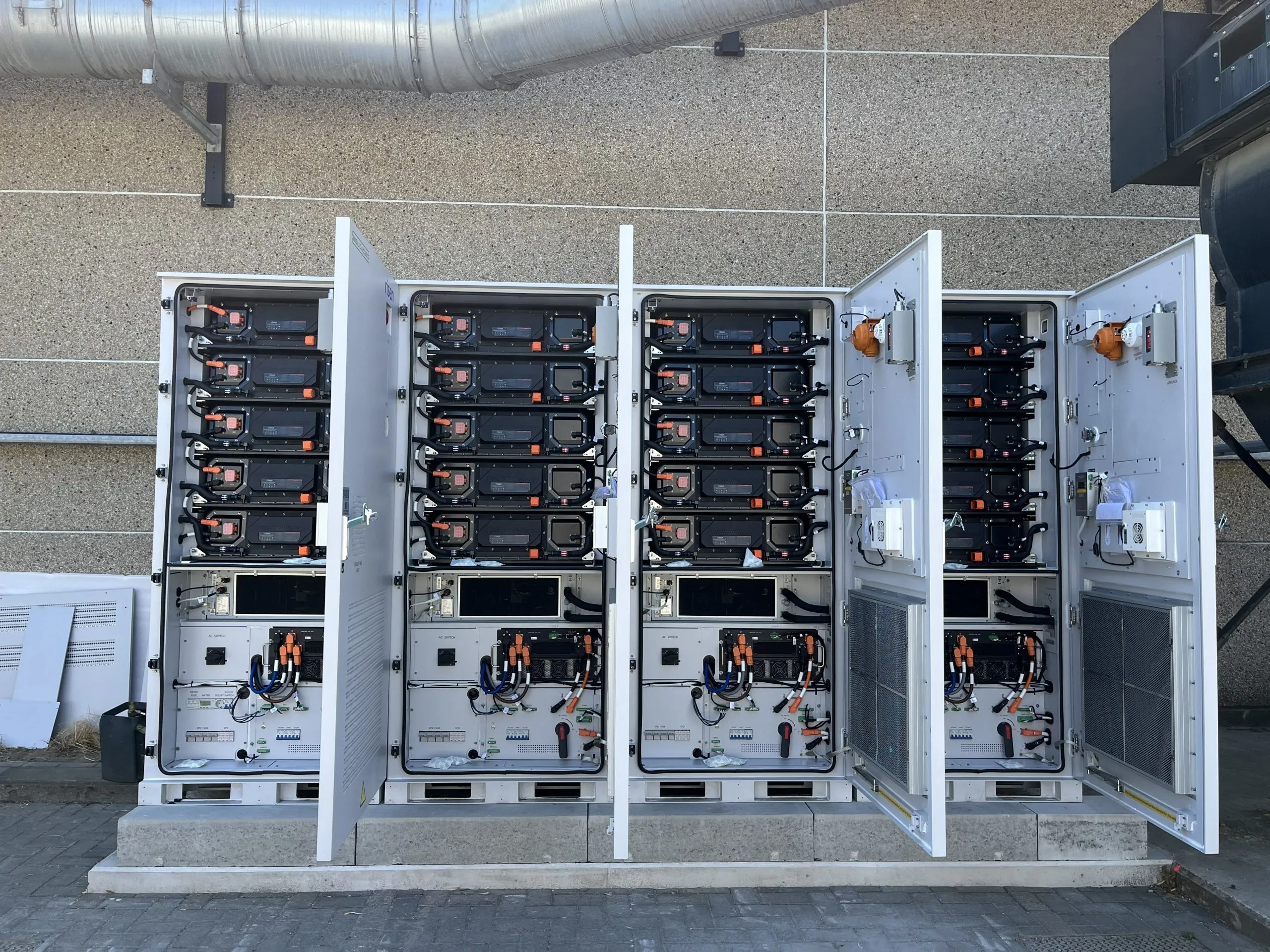
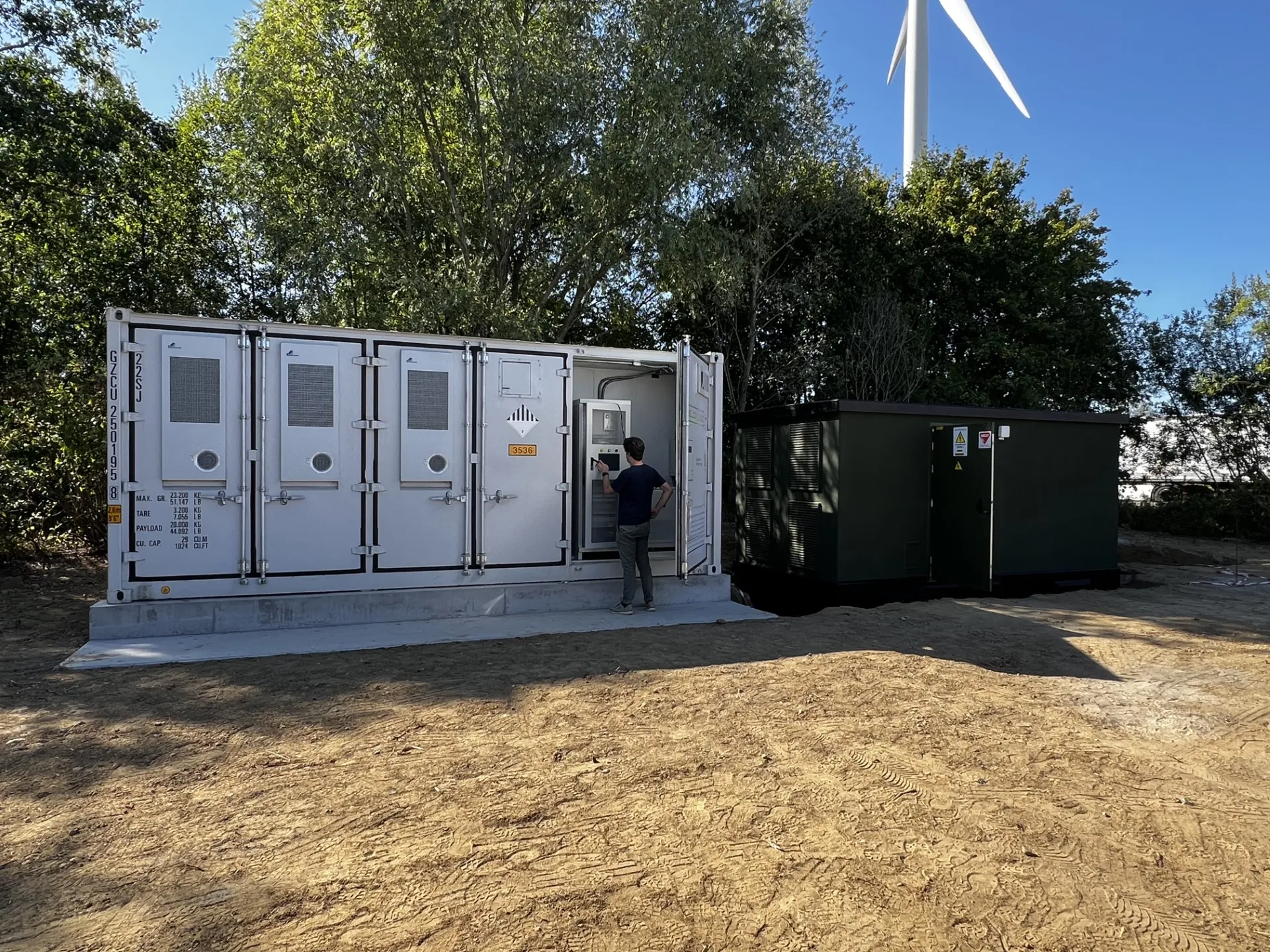
 Roeselare
: four liquid-cooled Risen batteries (500 kVA, 1 MWh) store solar power for self-consumption and peak shaving
- 500 kVA
- Nominal power
- 1 MWh
- Capacity
A BeLoaded battery stores power when it is cheap or when your solar panels make too much, and gives it back when your site needs it most. Our energy management system decides when.
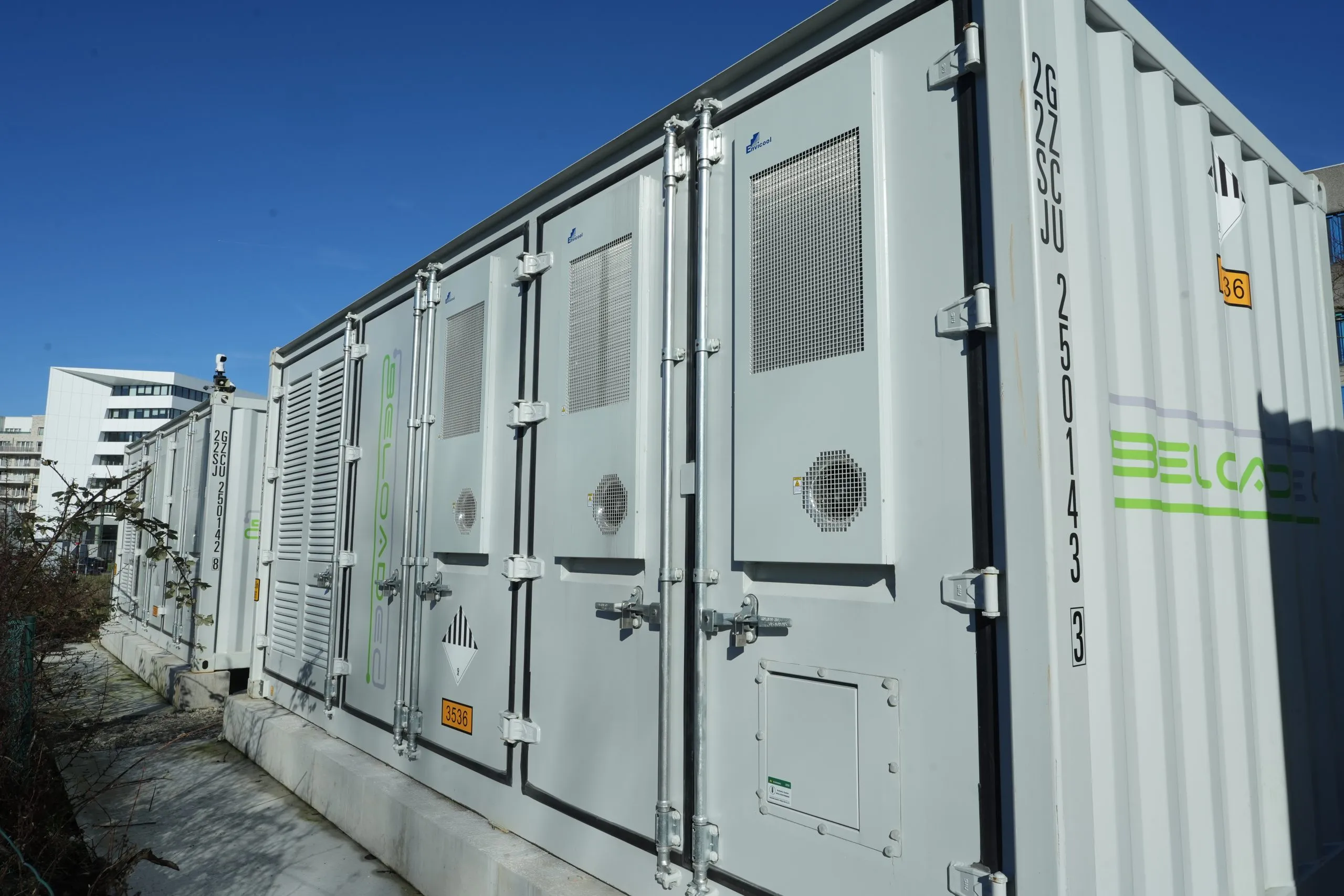
In short
A company battery (in Dutch: bedrijfsbatterij) is a large battery for a business site in Belgium. It charges when power is cheap or your solar panels produce more than you use, and discharges during your highest peaks. That lowers your capacity tariff, raises your own use of solar power and can earn money on energy markets.
Not sure? The quick check tells you in a few minutes which solution fits your site.
Your site uses power all day. The battery fills the gaps, so you stay under your limit and buy at the right moment.
Machines, lighting, heating and chargers draw power from the grid. The line shows the limit of your grid connection or the peak you want to stay under.
When several machines run at once, you go over that line. In Flanders, your highest 15-minute peak sets part of your bill for a whole year.
The battery charges on surplus solar power or cheap hours. At the peak, it discharges, so the grid only sees a flat line.
The EMS checks the day-ahead price. It charges when power is cheap and uses or sells stored power when it is expensive.
The capacity tariff is the part of your grid costs that depends on your highest power peak, not on how much energy you use in total. Fluvius has charged it in Flanders since 1 January 2023. Your peak is the highest average power you draw from the grid in any 15 minutes of the month, measured in kW. For most low-voltage connections, the tariff uses the average of your monthly peaks over the last 12 months, with a minimum of 2.5 kW. Larger companies on a high-voltage connection reserve an access power with Fluvius and pay extra when they go over it. Read more in our guide capacity tariff explained.
A battery lowers that peak. This is called peak shaving: when your site needs more power than you want to draw from the grid, the battery supplies the difference. One avoided peak can lower your grid costs for months, because it stays in the 12-month average.
Wallonia and Brussels work differently. In Wallonia, the regulator CWaPE set no capacity charge for low-voltage customers in 2026–2029 and introduced time-of-use network tariffs from 1 January 2026. In Brussels, Sibelga charges a fixed capacity component based on the power of your connection (in kVA). A battery still helps there: it shifts your use to cheaper hours and lets you do more with the same connection. Not sure how your bill is built? Ask us.
A BeLoaded battery comes with our energy management system (EMS), the software that keeps an eye on your electricity use and costs. The EMS connects all your assets: battery, solar panels, EV chargers and the grid. It sets priorities, so your daily operations always come first and your grid connection is used as well as possible.
The EMS keeps deciding what the battery does next: charge, discharge for self-consumption, or trade energy. It looks at your solar production and at market prices to get the most out of the battery. That matters more each year, because the Belgian grid is becoming less balanced.
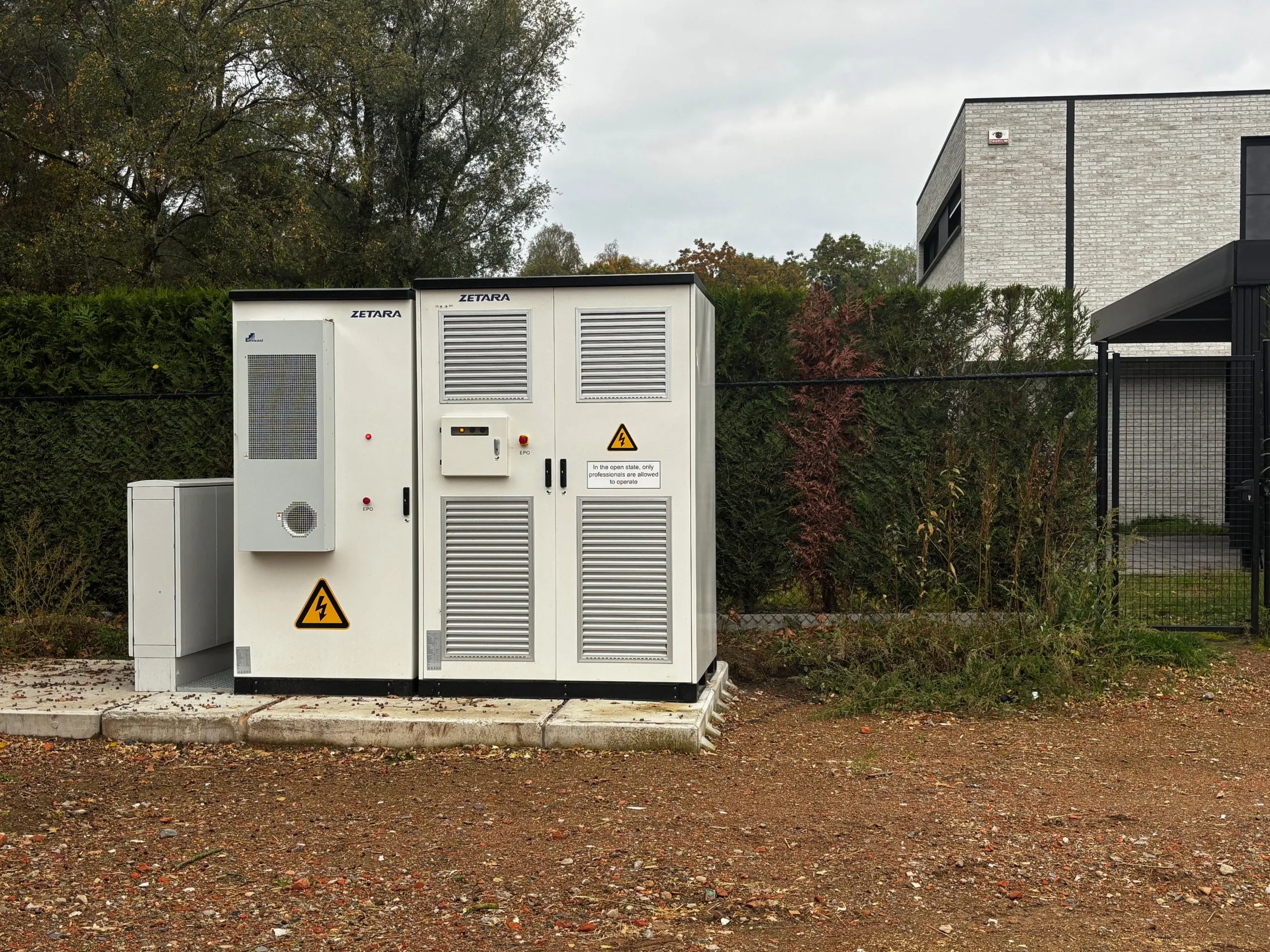
Europe's Fit for 55 targets mean more green power from wind and sun. But it is almost impossible to plan your business around the weather.
As more solar panels, wind turbines and EV chargers connect to the grid, the risk of imbalance and grid congestion grows. Too much supply pushes market prices down, sometimes below zero. Shortages at night or on cloudy days push prices up. The result: prices you cannot predict, a grid that is harder to balance and, in the worst case, a risk of blackouts.
A battery stores energy until you need it. You use more of your own green power, you buy when power is cheap, and you help keep the grid stable. In BeLoaded's experience, load balancing combined with batteries can give a return on investment within 4 to 5 years. Every site is different, so we always calculate your own case first.
A home battery (thuisbatterij) and a company battery store energy in the same way. The difference is in size, control and what they earn.
| Home battery | Company battery (BeLoaded) | |
|---|---|---|
| Built for | One household | Companies, car parks, logistics sites, public buildings |
| Size | Enough for one home | 125 kWh cabinets up to 5 MWh containers |
| Main goal | Use more of your own solar power | Lower peaks and capacity tariff, store solar power, trade on energy markets |
| Control | Usually the settings of the inverter | BeLoaded EMS that also steers solar panels and EV chargers |
| Market income | Limited | Possible through an aggregator, for example in FCR and aFRR |
| Installation | In a garage or utility room | Outdoor cabinet or container, with fire-safety and grid-operator checks |
Prefer not to invest yourself? Choose battery as a service: you use the battery and pay a monthly fee.
From a 1 MWh battery for peak shaving in Roeselare to market trading in Harelbeke.
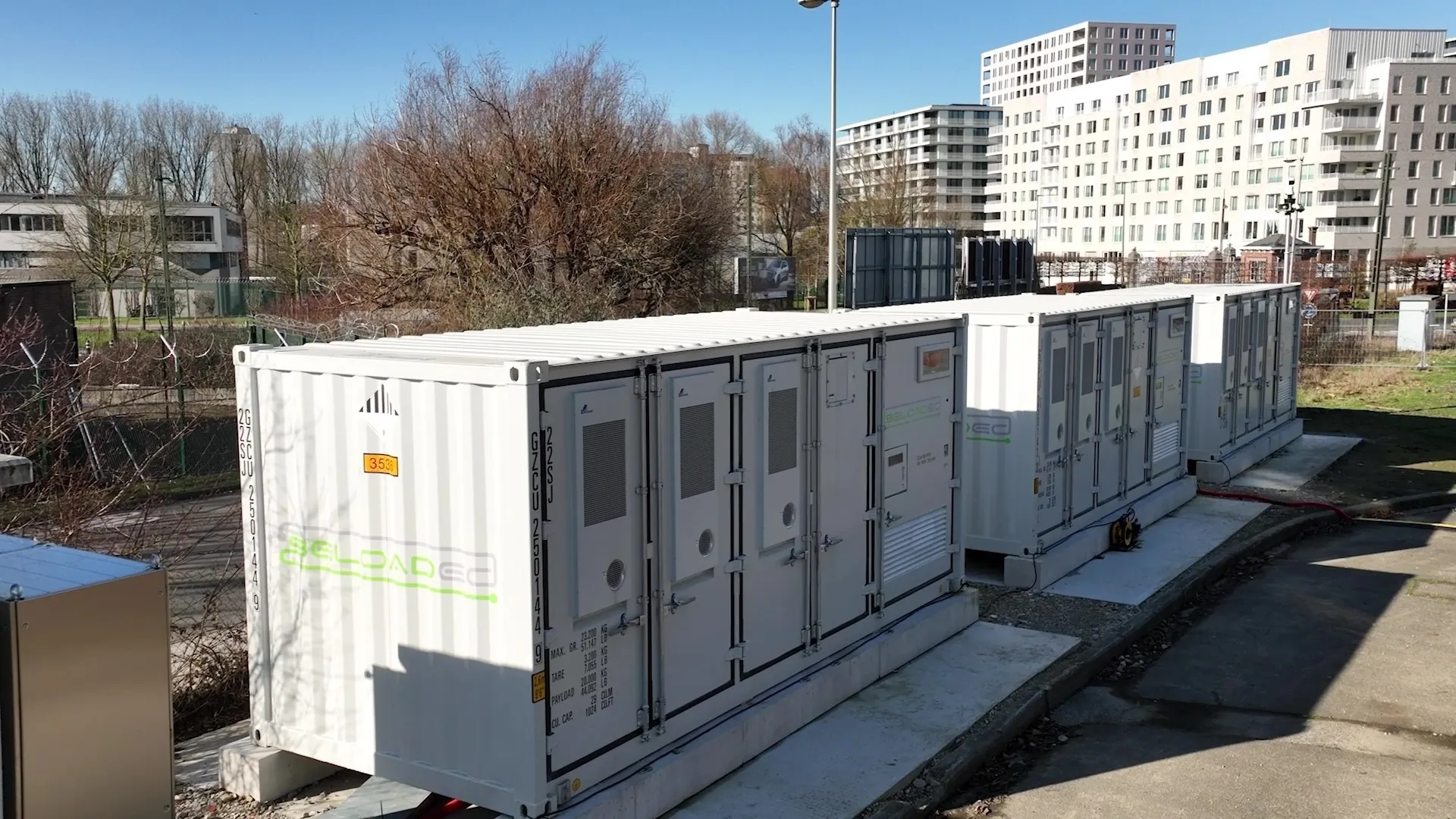
Roeselare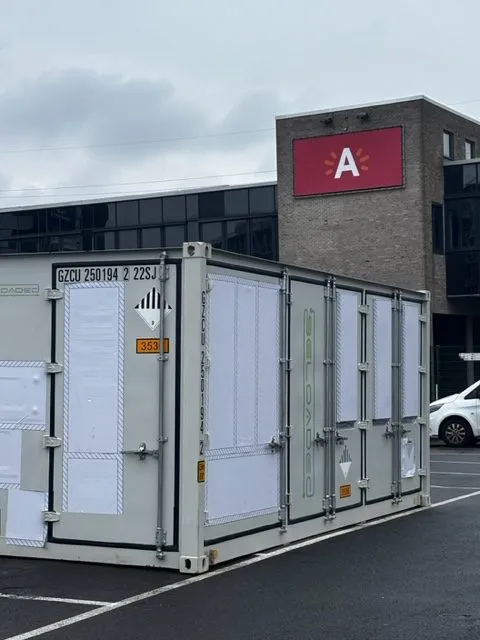 Antwerp
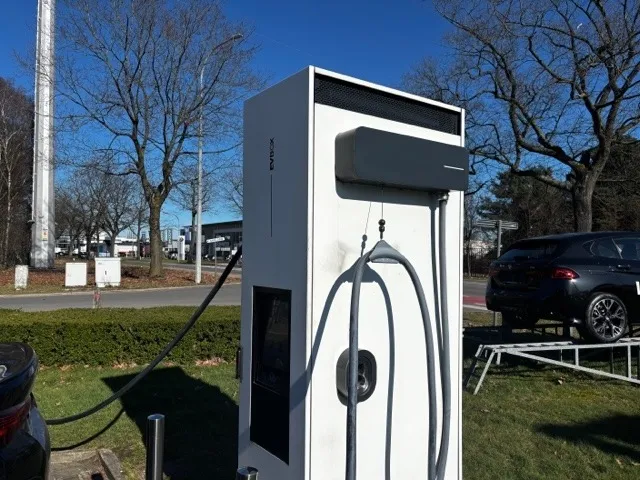
 Harelbeke
 Turnhout
A company battery, or bedrijfsbatterij, is a large battery energy storage system (BESS) for a business site. It stores electricity from the grid or from your solar panels and gives it back when you need it. BeLoaded batteries range from 125 kWh to 5 MWh and are steered by our energy management system, which decides every moment whether to charge, discharge or trade.
A home battery is sized for one household and mainly stores solar power for the evening. A company battery is much larger, from 125 kWh to several MWh, and does more: it cuts the peaks that set your capacity tariff, works with EV chargers and solar panels, and can earn money on energy markets. It is installed outdoors in a cabinet or container.
That depends on how high your peaks are and how often they happen. In Flanders, the capacity tariff follows your highest 15-minute peak each month, averaged over 12 months. If a battery cuts those peaks, every avoided kW counts for a full year. We calculate the effect on your real meter data before you decide. Start with the quick check.
In BeLoaded's experience, load balancing combined with a battery can give a return on investment within 4 to 5 years. The result depends on your peaks, your solar production, your energy contract and whether the battery also trades on markets. That is why we always simulate your own site first. You can try our battery simulator.
Yes. The BeLoaded EMS connects the battery, your solar panels, your EV chargers and the grid. It stores surplus solar power, uses it when your chargers or machines need it, and makes sure your site stays under its grid limit. This way you use more of your own green power and need less from the grid.
Not in the same way. Fluvius introduced the capacity tariff in Flanders on 1 January 2023. In Wallonia, CWaPE set no capacity charge for low-voltage customers in 2026–2029 and uses time-of-use tariffs instead. In Brussels, Sibelga charges a fixed component based on your connection power. A battery can still shift your use to cheaper hours in both regions.
No. With battery as a service, BeLoaded places the battery without an upfront investment. You pay a predictable monthly fee, and we take care of installation, monitoring, maintenance and upgrades. Buying remains possible if you prefer to own the battery yourself.
A business battery in Belgium is worth it when it can earn from several sources at once: lowering your capacity tariff, storing your own solar power, buying cheap power for expensive hours and offering flexibility to the grid. With only one of these, the business case is often weak. Measure your profile first, simulate second, invest third.
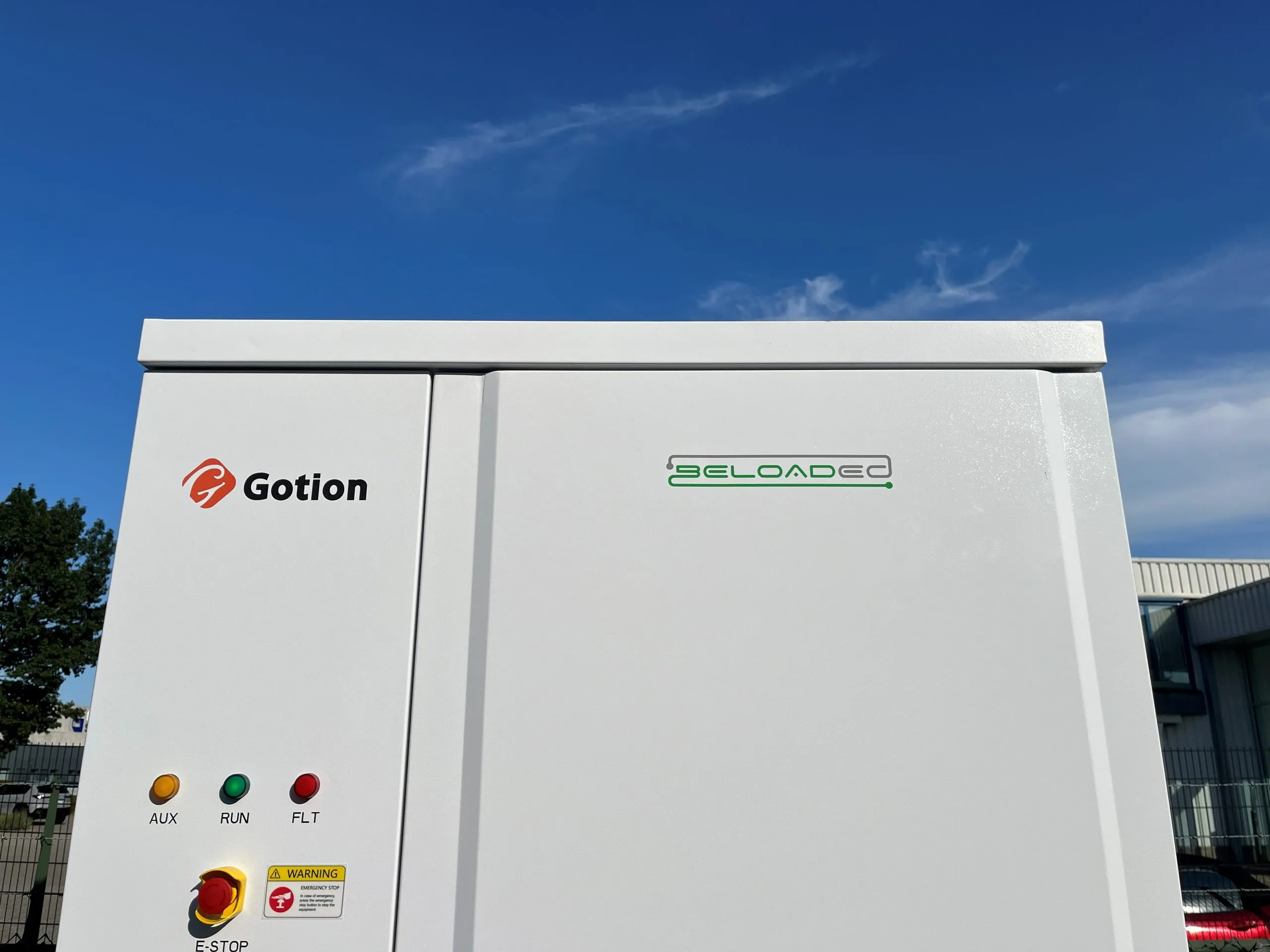
A home battery stores a few to around 20 kWh behind a household meter, mainly to use your own solar power in the evening. A business battery ranges from tens of kWh to several MWh, is steered by an energy management system and can lower grid costs, enable more EV chargers and earn money on energy markets. It also comes with more rules: a grid study, telecontrol from 250 kVA in Flanders and, in Brussels and Wallonia, environmental classification above about 10 kWh.
The capacity tariff is the part of your Belgian grid costs based on your highest 15-minute power peak, not on how many kWh you use. In Flanders every company pays it since 2023; in 2026 Wallonia and Brussels only charge peaks for larger connections. Spreading loads, smart EV charging, a battery and an energy management system can all lower that peak.
A Belgian company can buy a battery, finance it through a lease or loan, or use Battery as a Service (BaaS). Buying gives you all the value and all the risk. Leasing spreads the cost but leaves the risk with you. With BaaS you pay no upfront investment and the provider installs, operates and maintains the battery, in exchange for a recurring fee and, depending on the concept, a share of the revenues.
A company battery in Belgium needs an electrical inspection under the AREI, notification to and approval from the grid operator, and a fire safety approach agreed with the fire service and your insurer. The environmental rules differ by region: in Flanders batteries are not a VLAREM-classified activity, while Brussels and Wallonia classify stationary batteries above roughly 10 kWh. In Flanders, sites with 250 kVA or more of storage must also accept telecontrol by the grid operator.
Answer a few questions in the quick check, or talk to one of our energy experts about your peaks, your solar panels and your plans.