In short
A company battery can lower your grid costs, store your own solar power and earn money on energy markets. The next question is how to pay for it. In Belgium, companies usually choose between three routes: buying it, financing it through a lease or loan, or using Battery as a Service. Each route splits cost, risk and control differently. This guide compares them in plain terms so you can pick the one that fits your company.
What are the three options?
Buying. You pay for the battery (also called a BESS, battery energy storage system), the installation, the grid work and the control system. You own it from day one. You keep all savings and revenues, and you carry all the risks.
Leasing or financing. A bank or leasing company pays the supplier, and you repay in instalments over several years. You use the battery as if it were yours. In most leases, operation, maintenance and performance stay your responsibility. It is a way to spread the cost, not to hand over the work.
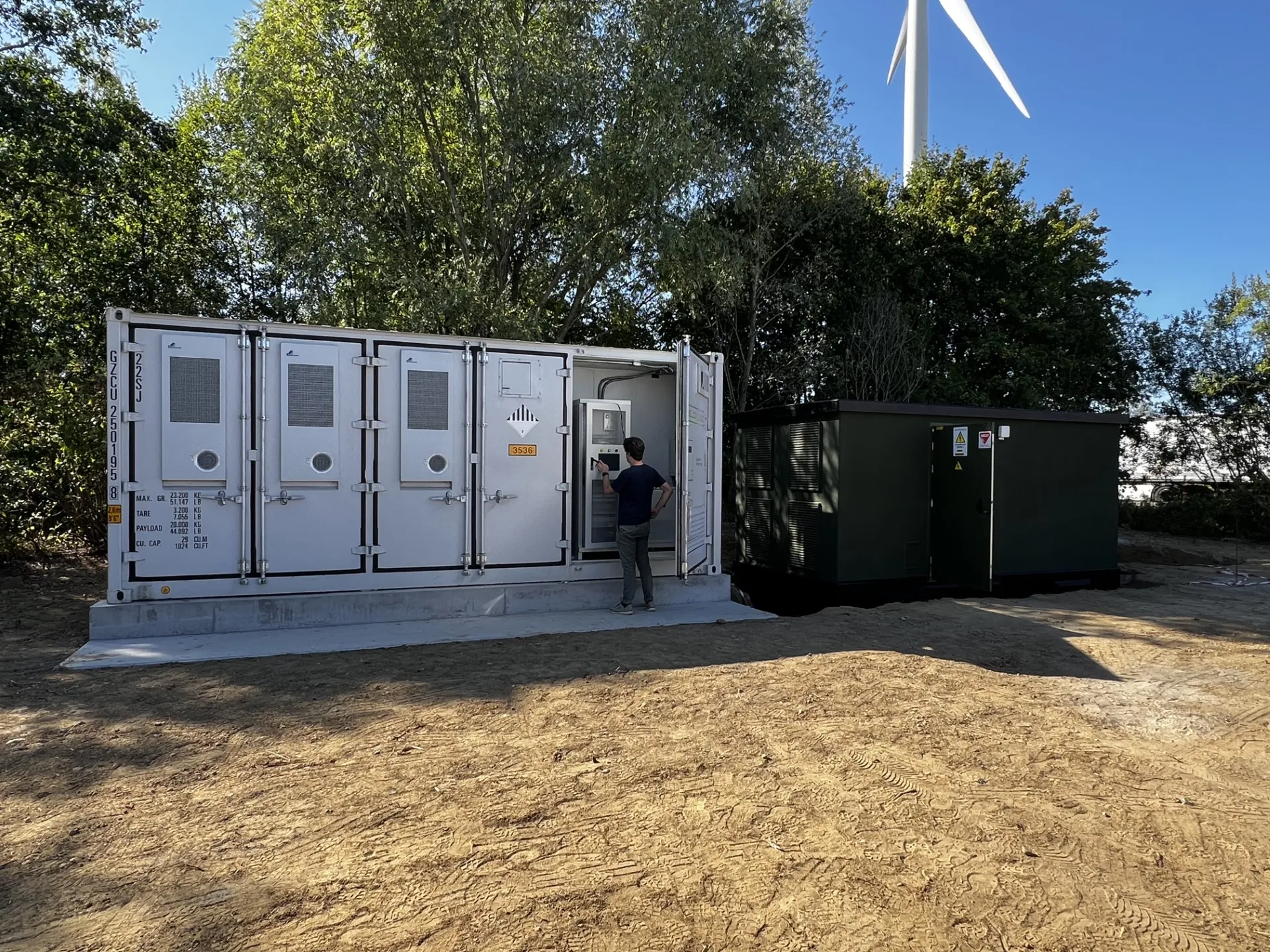
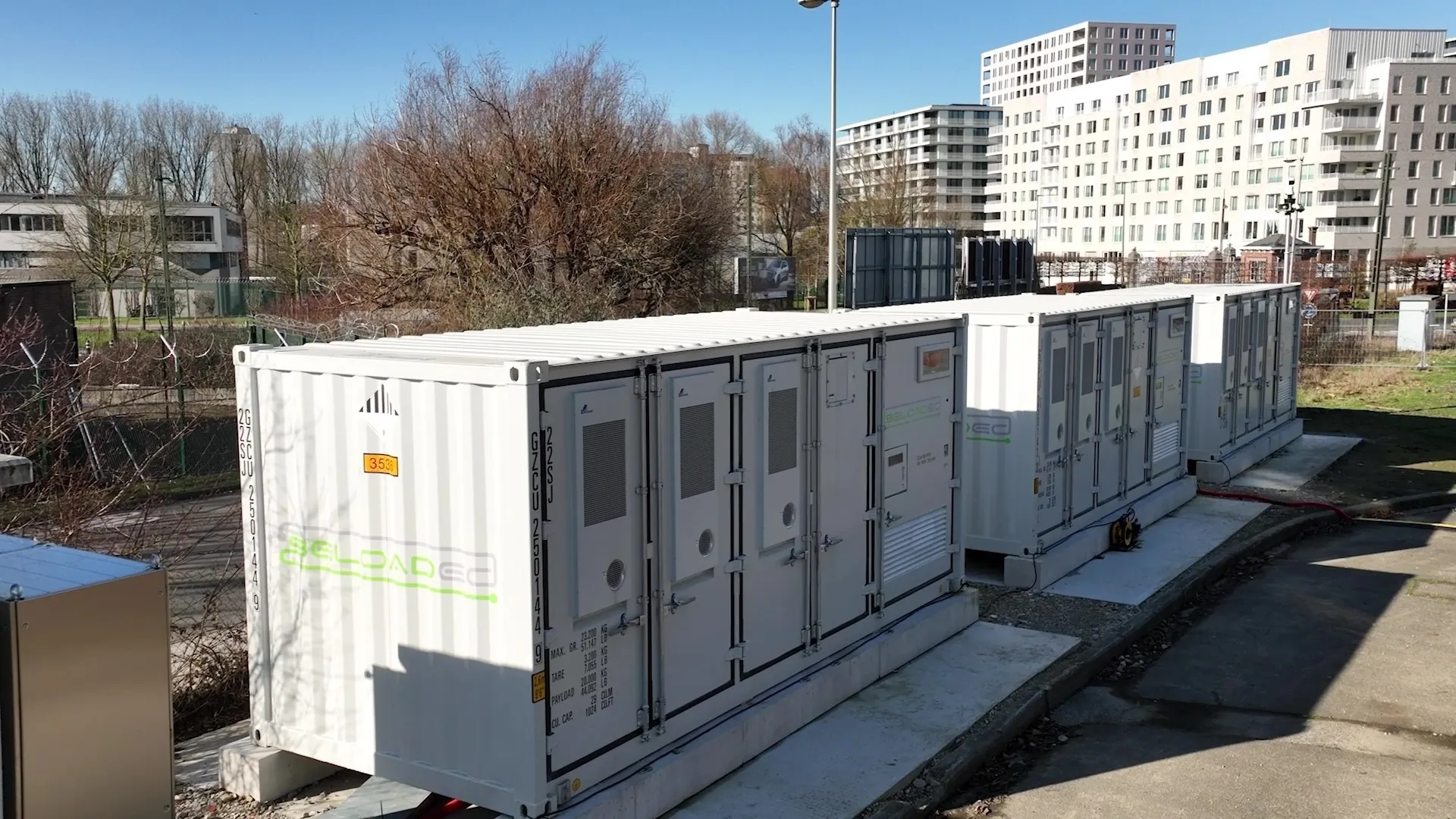
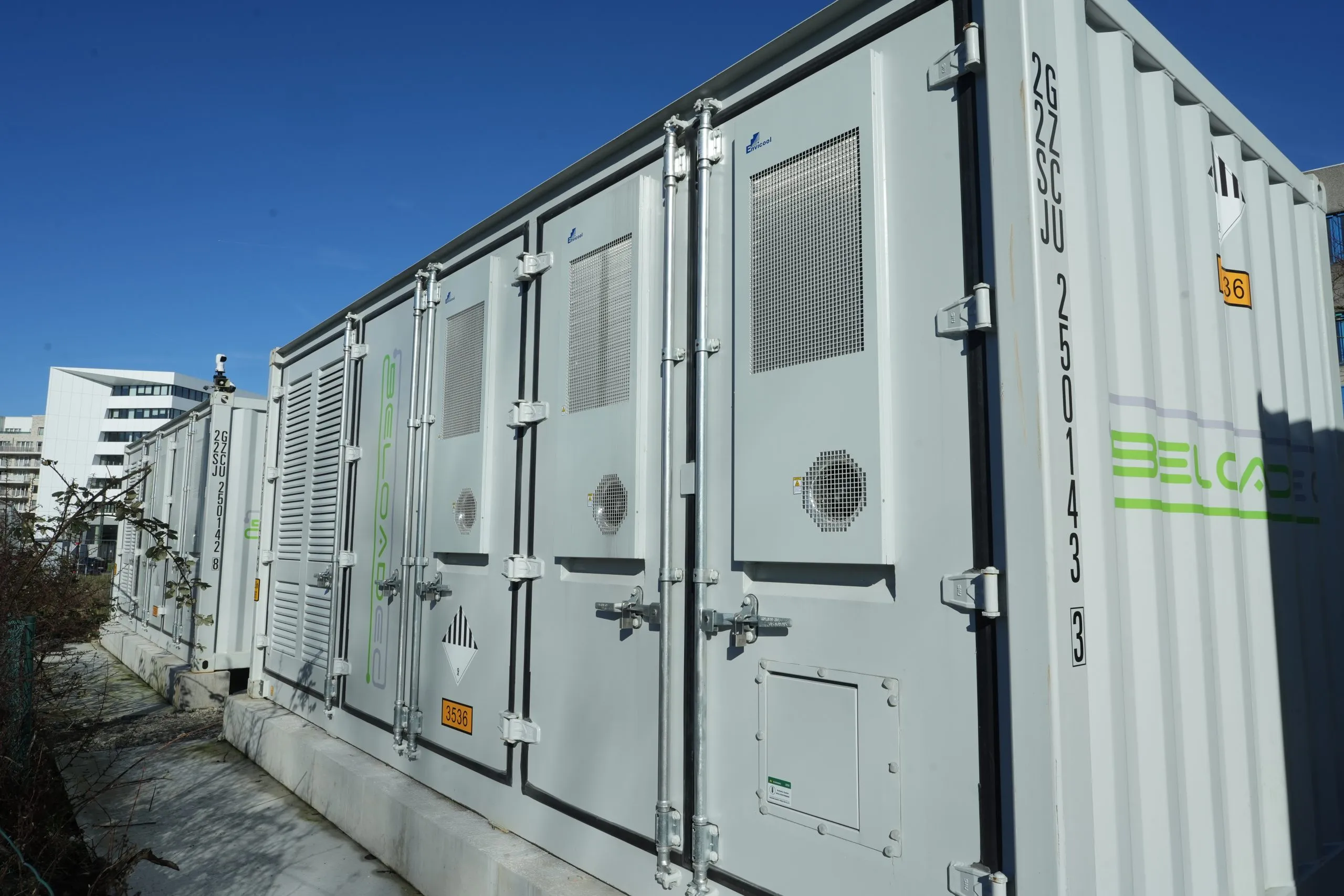
Battery as a Service (BaaS). A provider places the battery on your site without upfront investment from you. You pay a predictable recurring fee. The provider installs, monitors, maintains and upgrades the system. At BeLoaded, depending on the concept, you can also share in the net revenues from flexibility markets such as aFRR, mFRR and the day-ahead market.
How do buying, leasing and BaaS compare?
| Buy | Lease or loan | Battery as a Service | |
|---|---|---|---|
| Upfront cost | Full investment | Low or none | None |
| Who owns the battery | You | You, or the lessor until the end of the lease | The provider |
| Who operates and maintains it | You, or a contractor you pay | Usually you | The provider |
| Technical and performance risk | Yours | Mostly yours | Mostly the provider’s |
| Savings and market revenues | 100% yours | 100% yours, minus financing cost | Shared, depending on the contract |
| Effect on your balance sheet | Investment (capex) | Depends on the lease type; ask your accountant | Operating cost (opex) |
| Contract length | None after delivery, apart from warranty and service | Follows the financing term, usually several years | Multi-year, agreed per project |
| Best for | Companies with capital, energy know-how and appetite for risk | Companies that want ownership but spread the cost | Companies that want the result without the investment or the work |
Where does a battery’s value come from?
Whatever the model, the battery earns value in the same ways. Knowing them helps you judge any offer.
- Peak shaving. The battery covers your highest peaks. This lowers your capacity tariff — the part of your grid bill based on your highest 15-minute peak — and can let you add EV chargers without a grid upgrade.
- Self-consumption. The battery stores solar surplus for use later in the day instead of injecting it cheaply.
- Energy arbitrage. With a dynamic contract, the battery charges when prices are low or negative and discharges when they are high.
- Balancing markets. Elia, the Belgian grid operator, buys reserves such as FCR and aFRR to keep the grid stable. Elia’s minimum bid is 1 MW, so most company batteries take part through an aggregator that bundles several sites.
A battery creates the most value when an energy management system combines these streams every quarter-hour. That control is also where many projects fail.
What risks should you weigh?
- Market risk. Market revenues move. BeLoaded has seen day-ahead and imbalance prices move closer together, which makes some imbalance opportunities smaller than a few years ago.
- Control risk. The battery only earns what its control strategy allows. In Turnhout, a battery set up purely for the imbalance market did not reach the expected returns. BeLoaded took over the installation and refocused the EMS on self-consumption and limiting peaks.
- Technical risk. Cells age, inverters fail, software needs updates. Someone must monitor the system around the clock and act.
- Rules risk. Grid rules change. In Flanders, for example, a site with batteries of 250 kVA or more in total must now accept telecontrol by the grid operator, under the 2026 technical regulation.
- Sizing risk. A battery that is too large sits idle; one that is too small misses value. Sizing must start from your real data.
When you buy or lease, these risks sit with you. With BaaS, the provider takes on most of the technical and control risk, because its fee depends on a working system.
Example: one battery, three ways to pay
The numbers below are round and hypothetical, chosen only to show the mechanics. They are not a quote, a BeLoaded price or a forecast.
Imagine a battery project that costs €200,000 all-in and creates €35,000 of net value a year from peak shaving, self-consumption and markets.
- Buy. You pay €200,000 in year one. If the €35,000 a year holds, the investment is paid back after about six years, and the value after that is yours. If market revenues drop or the control is poor, payback takes longer.
- Lease. You pay, say, €3,500 a month over a multi-year term, including interest. That is €42,000 a year against €35,000 of value: you only come out ahead once the lease is paid off, so the lease must be shorter than the battery’s useful life, or the value higher. The risks stay with you.
- BaaS. You pay nothing upfront and a monthly fee agreed in the contract. You keep part of the value without the investment, maintenance or control work. You give up part of the upside in exchange.
The right choice depends on your cost of capital, your internal energy know-how and how much risk you want on your books.
What should you ask any provider?
- What exactly is included: installation, grid study, EMS, monitoring, maintenance, insurance, end-of-life recycling?
- Who decides how the battery is used every day, and can you see the results?
- How are savings and market revenues measured, shared and reported?
- What happens if the battery underperforms or fails?
- How long does the contract run, what does early exit cost, and what happens at the end?
- Who handles permits, the AREI inspection and the grid operator’s requirements? Our guide on battery permits and fire safety lists them.
Checklist
- Gather 12 months of 15-minute consumption data and, if you have them, solar production data.
- Decide what matters most: lowest total cost, no upfront investment, or least work and risk.
- Ask your accountant how each model affects your balance sheet and taxes.
- Compare offers on total cost and expected value over the full term, not on monthly cost alone.
- Check that the control strategy fits your site, not only the markets.
- Read the exit and end-of-term clauses before you sign.
Next step
Start with the quick check to see whether a battery fits your site at all. If it does and you prefer not to invest yourself, read how Battery as a Service works at BeLoaded: no upfront cost, 24/7 monitoring and a custom proposal within 48 hours. If you would rather own the system, our battery page and the Harelbeke project show what a battery earning on energy markets looks like.
Sources
- Elia – Bidding rules for balancing services (FCR, aFRR)
- Fluvius – How the capacity tariff is charged
- Vlaamse Nutsregulator – Technical regulation for electricity distribution (TRDE), 2026 amendments
Updated: 29 October 2026