
Free quick check: what fits your site?
Answer four questions about your site. In about a minute you see which step makes sense, even when that step is not a battery.
In short
In short
The BeLoaded quick check asks four short questions about your site and takes about one minute. Based on your answers, you get honest advice on what fits: smart EV charging, a company battery, better use of your solar power or an energy management system. If a battery is not the right answer for you, the check tells you.
- 4 questions, about 1 minute
- Honest advice, also when a battery is not the answer
- Next step: a simulation or a 30-minute call with an expert
Start the quick check
Choose the answer that fits your site best. There are no wrong answers.
Our honest first advice
A battery is probably not your first step. Start by measuring your 15-minute peaks: smarter scheduling is sometimes enough. Why not every company needs a battery →
With your own high-voltage cabin, grid fees and peak costs are calculated differently. We check this in the first call.
Email me this advice
Questions about the quick check
Why would a battery not be the answer for my site?
A battery pays off when your peaks are high, you have a lot of solar surplus or you can earn on flexibility markets. If your peaks are small or the issue is only your charge points, cheaper steps often come first. Load balancing spreads the available power over your chargers, and an energy management system moves consumption to cheaper hours.
What information do I need for the quick check?
A rough idea of your site is enough. For example: do you have solar panels, how many charge points do you have or plan, and do you run into the limit of your grid connection? You do not need your bill or meter data for the quick check. For the more detailed battery simulator you do.
What happens after the quick check?
You see which direction fits your site, with links to the matching solution and plain-language guides. Want real figures? Use the battery simulator with your own data, or book a 30-minute call with an expert. See how a logistics site in Antwerp went from 90 kW to almost 600 kW of available capacity.
Learn the basics
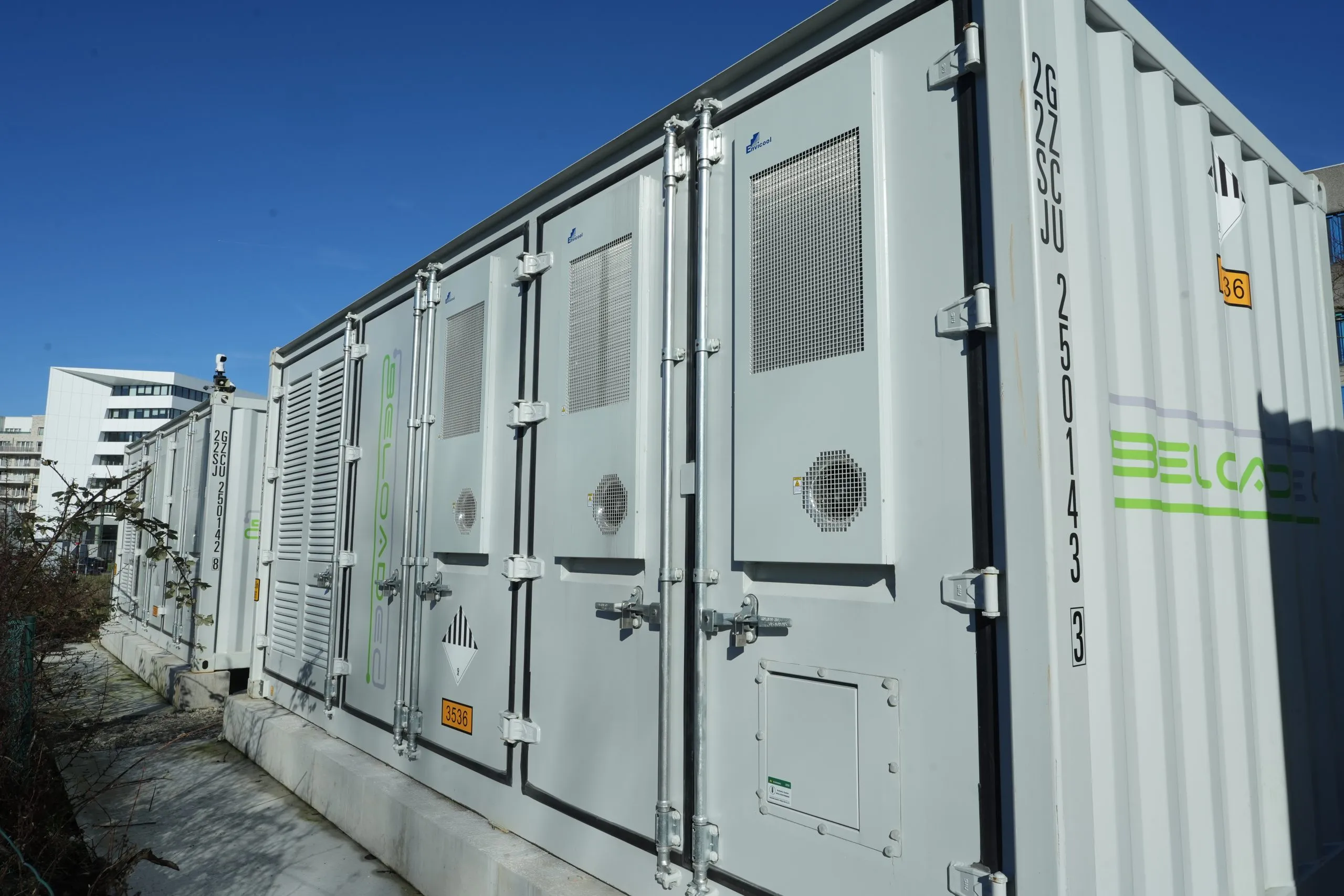
Is a business battery worth it? An honest guide for companies
A business battery in Belgium is worth it when it can earn from several sources at once: lowering your capacity tariff, storing your own solar power, buying cheap power for expensive hours and offering flexibility to the grid. With only one of these, the business case is often weak. Measure your profile first, simulate second, invest third.
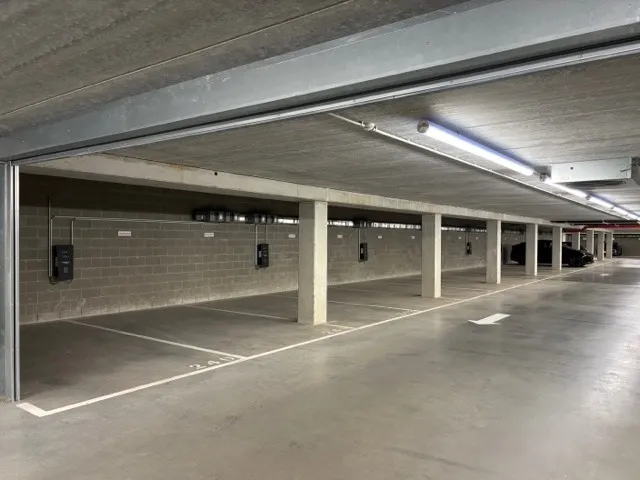
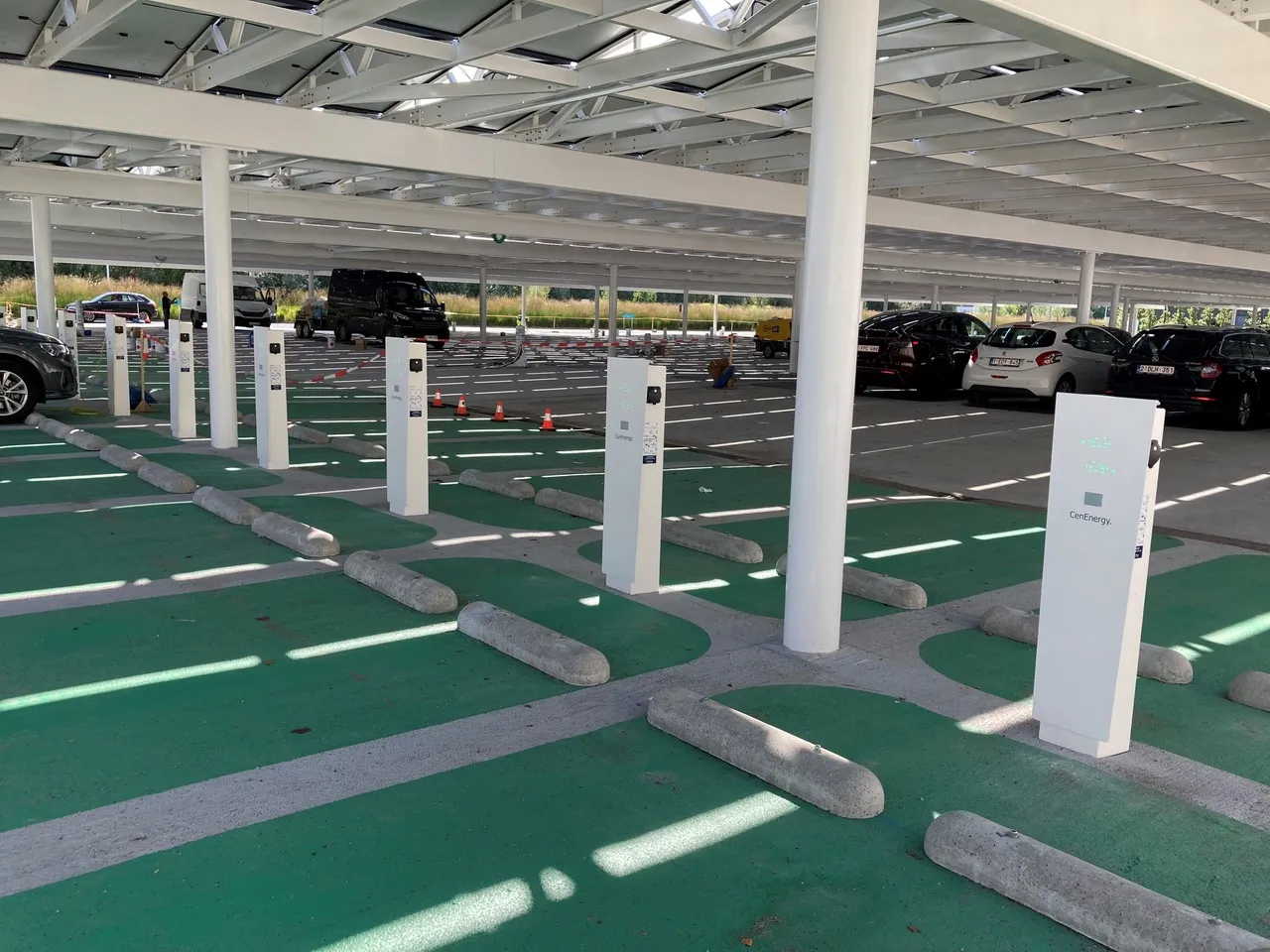
More EV chargers without a grid upgrade: how load balancing works
Most Belgian companies can add many more EV charge points without a heavier grid connection. Dynamic load balancing shares the power that is left on your connection across all chargers in real time, and a battery can add extra power when the grid cannot. BeLoaded runs 112 balanced chargers in one Brussels car park and raised a logistics site from 90 kW to almost 600 kW of available power.
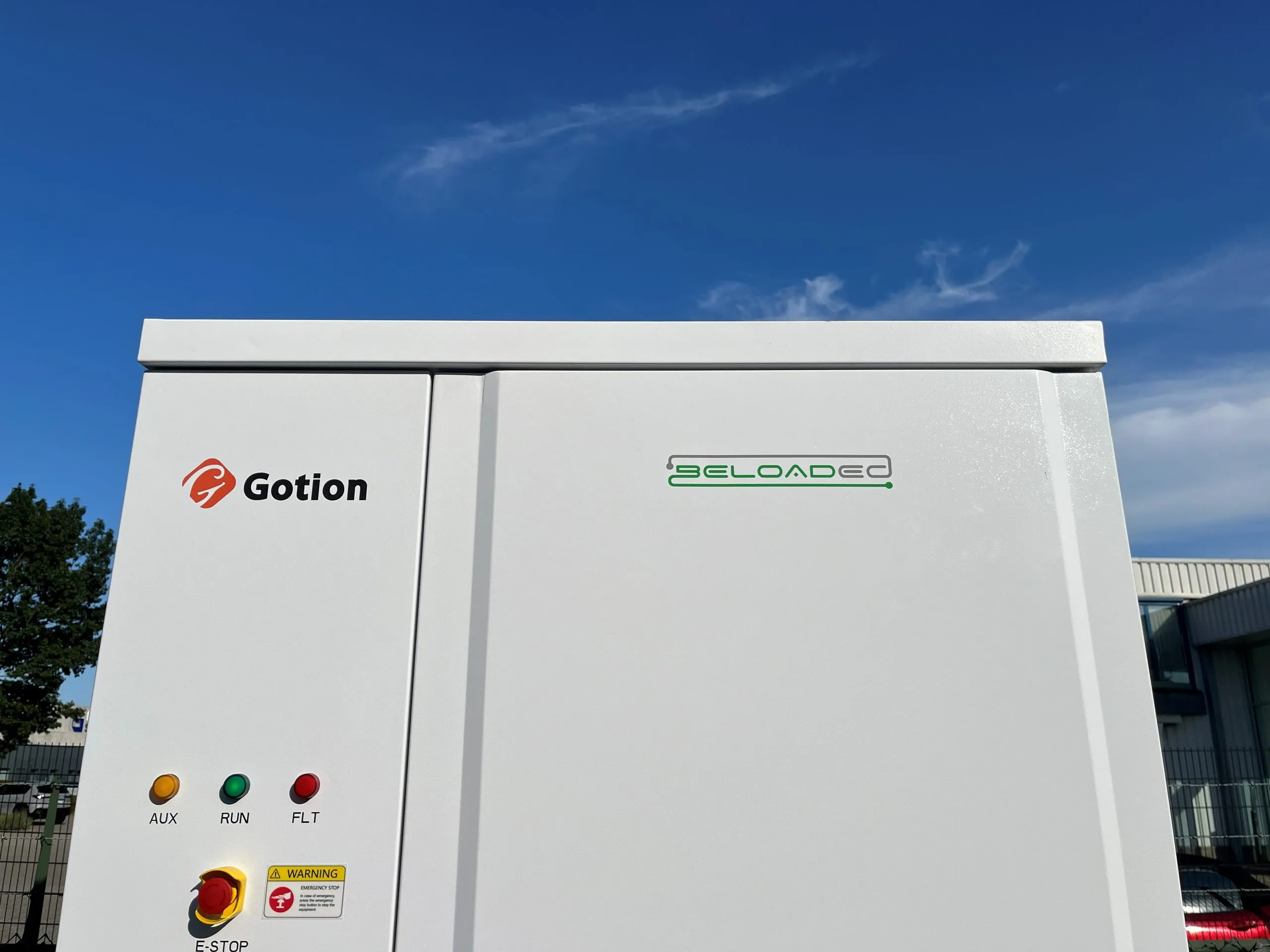
Business battery vs home battery: what is the difference?
A home battery stores a few to around 20 kWh behind a household meter, mainly to use your own solar power in the evening. A business battery ranges from tens of kWh to several MWh, is steered by an energy management system and can lower grid costs, enable more EV chargers and earn money on energy markets. It also comes with more rules: a grid study, telecontrol from 250 kVA in Flanders and, in Brussels and Wallonia, environmental classification above about 10 kWh.
- Capacity tariff
- The capacity tariff is the part of your network costs in Flanders based on your highest 15-minute power peak each month, not only on the kWh you use.
- Grid connection capacity
- Grid connection capacity is the maximum power your site can draw from or inject into the grid at once, set by your connection and contract, usually expressed in kVA.
- Load balancing
- Load balancing automatically shares the available power between charge points and other loads, so cars charge as fast as possible without overloading your grid connection.
- Battery energy storage system (BESS)
- A battery energy storage system (BESS) is a company-scale battery with inverter and controls that stores electricity when it is cheap or plentiful and releases it when needed.
- Energy management system (EMS)
- An energy management system (EMS) is software that measures and steers your solar panels, battery, charge points and other loads together, to cut costs and stay within grid limits.