In short
A business battery is worth it when it has enough jobs to do. One job, such as shaving a peak a few times a month, rarely pays for the investment. Three or four jobs combined often do. This guide shows what a battery can earn, when it does not pay off, and how to check your own case before you sign anything.
When is a business battery worth it?
A company battery (BESS) costs money whether it works or sits idle. So the real question is not “do we need a battery?” but “can a battery create enough value for our specific energy profile?”
A battery tends to pay off when most of these are true:
- Your site uses a lot of electricity during the day, every day
- Your peaks are high and come back regularly
- You have solar panels that send power to the grid at low prices
- You buy power at a price that follows the market
- You can connect the battery without heavy grid works
What can a battery earn or save?
There are four main value streams. The trick is to combine them in one battery, steered by one energy management system.
| Value stream | What the battery does | What you need | How predictable |
|---|---|---|---|
| Peak shaving | Discharges during your highest quarter-hours to lower the capacity tariff | Regular, clear peaks | High, once peaks are known |
| Self-consumption | Stores surplus solar power and uses it later on site | A solar installation with surplus | Medium, depends on the weather |
| Arbitrage | Charges when power is cheap, discharges when it is expensive | A dynamic or spot-indexed contract | Medium, depends on price spreads |
| Flexibility markets | Helps Elia keep the grid balanced, for a fee | An aggregator and fast control | Lower, market prices change |
Peak shaving is the most predictable stream. In Flanders the capacity tariff is billed on your highest 15-minute peaks, so every kW you remove has a clear value.
Self-consumption means using your own solar power instead of injecting it. This matters more and more. In 2025 Belgium counted 520 hours with negative electricity prices, a record according to the federal regulator CREG. In those hours, injected solar power earns nothing or even costs money.
Energy arbitrage uses the gap between cheap and expensive hours. Since 1 October 2025, the day-ahead market sets a price for every quarter-hour, so there are 96 prices per day instead of 24. That gives a battery more chances to buy low and sell high.
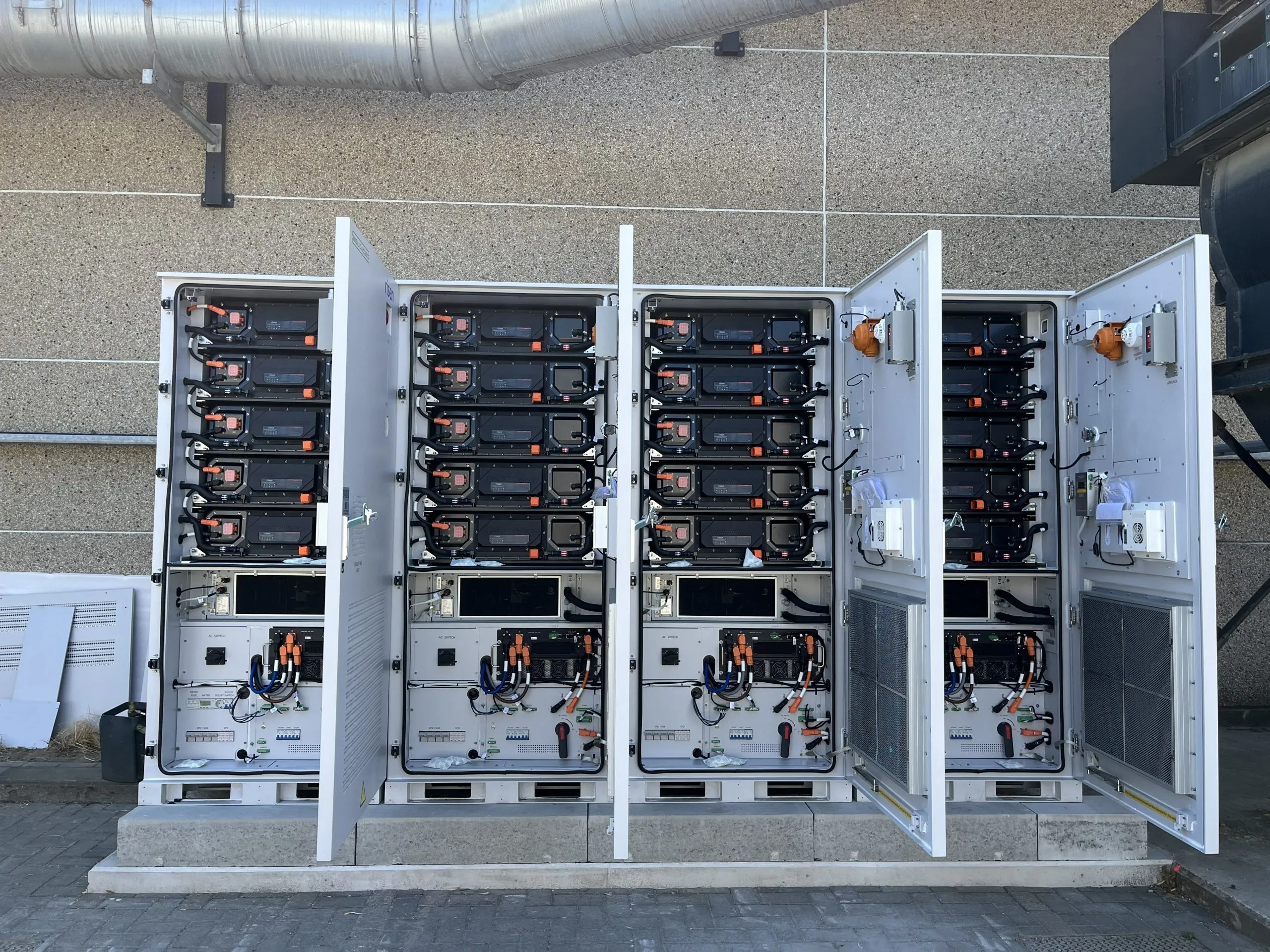
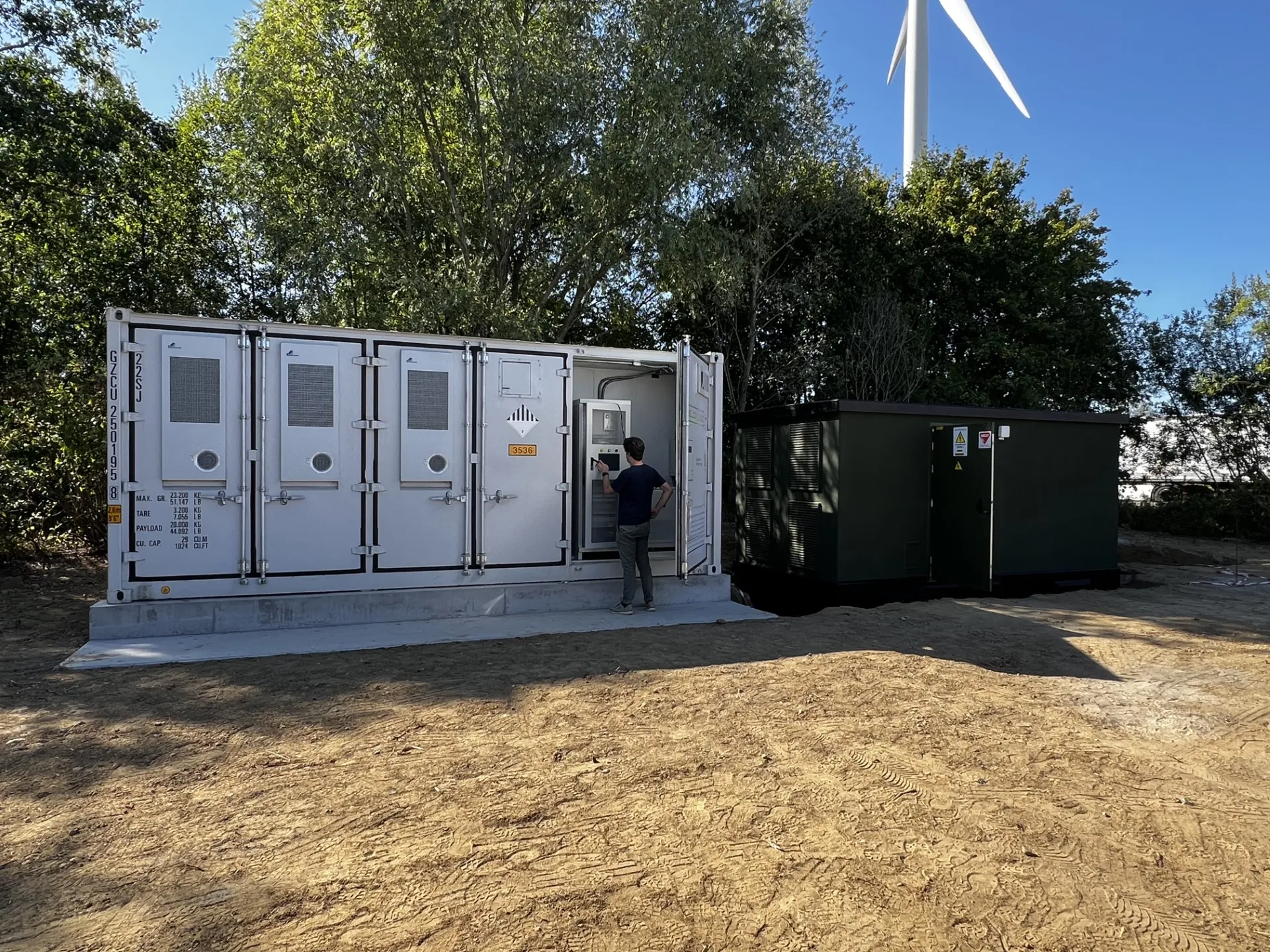
Flexibility markets pay batteries to react to grid signals. Elia, the Belgian transmission system operator, buys services such as FCR and aFRR. Smaller batteries take part through an aggregator. In Harelbeke, a 500 kW / 1,290 kWh battery earns revenue in FCR and aFRR before the logistics centre on that site is built.
When is a battery NOT worth it?
We say this openly, because a battery that does not pay off helps no one. A battery is often the wrong first step when:
- Your consumption is low, or very irregular.
- Your peaks are rare or hard to predict.
- Your solar power is already used almost fully on site.
- Installing the battery needs a new transformer or main low-voltage switchboard.
- You can lower your peak for free by shifting loads or charging EVs smartly.
- There is no control system to combine several value streams.
In those cases, the better investment may be shifting production, smart EV charging, energy efficiency, a better energy management system or a different way of buying energy. The battery should be part of the solution, not the starting point.
The Turnhout project shows why stacking matters. The battery there was first set up to work 100% on the imbalance market and did not deliver the expected returns. BeLoaded took over, moved the focus to self-consumption and DC load balancing to cut peaks, and now follows it up daily for maximum financial return.
What decides the payback period?
Payback depends on a handful of factors:
- Installation cost. Grid works, cabling and fire safety can weigh more than the battery itself.
- Number of value streams. Each extra stream shortens payback.
- Sizing. A battery that is too big sits idle; one that is too small cannot cover your peak.
- Control. Without a smart EMS, the battery cannot switch between jobs during the day.
In BeLoaded’s experience, load balancing combined with a battery can reach a return on investment within 4 to 5 years. A payback of less than four years is possible under specific conditions: no changes to the transformer or main low-voltage switchboard, operation within your existing contracted capacity, the grid operator’s remote control requirement (RTU) built into the EMS, the battery placed behind the NOB panel of the solar installation, and a battery concept based on monoblock units. These are results from our projects, not a promise for every site.
Example: adding up the value streams
Example (hypothetical round numbers): an SME in Flanders with a solar installation and a 100 kW / 200 kWh battery.
- Peak shaving: the monthly peak drops by 50 kW. At an assumed €50 per kW per year, that saves €2,500 per year.
- Self-consumption: on 150 sunny days the battery stores 100 kWh of surplus solar. Each stored kWh avoids buying power at €0.10 more than the injection value. That is 150 × 100 × €0.10 = €1,500 per year.
- Arbitrage: on 150 other days the battery shifts 150 kWh from cheap to expensive quarter-hours, with an average gap of €0.06 per kWh. That is 150 × 150 × €0.06 = €1,350 per year.
- Flexibility markets: possible extra revenue through an aggregator, but too variable to plan with in this example.
Total: about €5,350 per year before flexibility revenue. Divide the installed cost on your quote by this yearly amount for a rough simple payback. Keep in mind that the same kWh cannot be used twice: the EMS decides each day which job pays most.
Checklist: is this for you?
- Your 15-minute peaks are high and come back every month
- You have solar panels and often inject power at low or negative prices
- You buy, or could buy, power at day-ahead prices
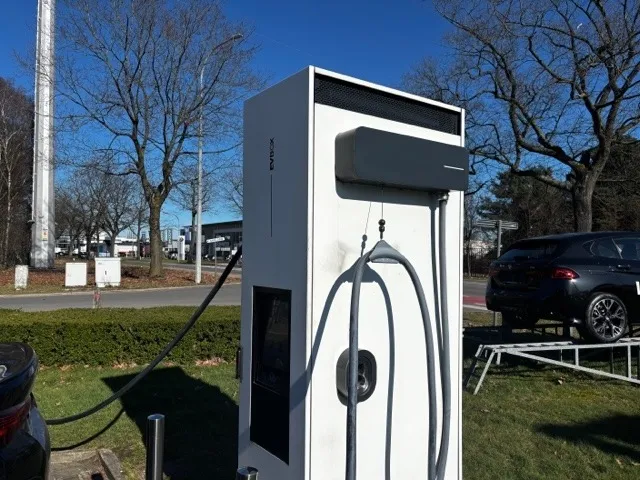
- You want more EV chargers or machines without a heavier grid connection
- You have space for a battery near your main connection
- You want a clear simulation before you invest
Next step
Start with your own figures. Do the free quick check to see which value streams fit your site. If a battery looks promising, explore our batteries or, if you prefer no upfront investment, Battery-as-a-Service. You can also model the numbers in our simulator.
Sources
- Fluvius – Capaciteitstarief
- VRT NWS – Prijs van elektriciteit dook 520 uur onder nul in 2025 (CREG data)
- SDAC – 15-minute MTU in SDAC was implemented (PDF, 1 October 2025)
- Elia – Keeping the balance (FCR, aFRR, mFRR)
Updated: 29 October 2026