In short
With a dynamic energy contract, your company pays an electricity price that changes every quarter-hour, following the Belgian day-ahead market. Cheap hours become cheaper for you, expensive hours more expensive. It pays off when you can move consumption. This guide explains how the price is set, what the risks are and why a battery and an energy management system make the difference.
What is a dynamic energy contract?
A dynamic energy contract links the energy part of your bill to the wholesale market price. Most formulas look like this:
your energy price = day-ahead price × a factor + a fixed supplier fee
The rest of your bill does not change. Grid costs, taxes and the capacity tariff stay the same as with a fixed or variable contract. So the dynamic part is only the energy, but that is often the largest single part.
How are day-ahead prices set?
The day-ahead market is an auction where electricity for tomorrow is bought and sold. In Belgium it runs on EPEX SPOT as part of the European market coupling.
- Producers and buyers send their bids for each period of the next day.
- The auction closes around midday.
- The prices for every period of tomorrow are published in the early afternoon.
Since 1 October 2025, the European day-ahead market works with 15-minute periods. Belgium now has 96 prices per day instead of 24. That matches the quarter-hours your digital meter records. You can follow the prices on our page about electricity prices in Belgium.
Who can get a dynamic contract?
In Belgium, suppliers with more than 200,000 customers must offer a dynamic contract to customers with a digital meter. Several smaller suppliers offer one as well. In late 2025, at least seven suppliers actively offered a dynamic contract. The offer is wider in Flanders than in Wallonia and Brussels.
You need a digital meter that sends quarter-hour data to your supplier. These consumer offers mainly target households and small businesses. Companies with a larger or medium-voltage connection usually negotiate a contract indexed to the day-ahead price directly with their supplier. The logic is the same.
What are the risks?
A dynamic price can move a lot, within one day and between seasons.
- Price spikes. According to Test Achats, Belgian day-ahead prices in 2025 ranged from about -€460 to more than €500 per MWh.
- Expensive evenings. On 22 May 2026, for example, afternoon prices fell to €0 per MWh while evening prices reached about €165 per MWh.
- Harder budgeting. Your monthly energy bill is less predictable than with a fixed price.
- Low value for solar injection. In 2025 Belgium counted 520 hours with negative electricity prices, a record according to the CREG. Solar power you inject at those moments earns little or nothing.
When does a dynamic contract pay off?
It depends on when you use electricity and how flexible you are.
| Your situation | Dynamic contract? |
|---|---|
| Most use at night, at weekends or midday | Good fit |
| EV fleet that stays parked for hours | Good fit, with smart charging |
| Cooling, heating or storage you can pre-run | Good fit |
| Solar panels plus a battery | Good fit, the battery soaks up cheap hours |
| Most use between 17:00 and 22:00, not flexible | Risky, a fixed price may be cheaper |
| No way to shift loads and a tight budget | Risky |
For households, the Vlaamse Nutsregulator found that a dynamic contract was on average the cheapest option in Flanders in 2025. For companies the answer depends on the profile, so run the numbers on your own quarter-hour data first.
Example: charging a van fleet at the right time
Example (hypothetical round numbers): a delivery company with 20 electric vans. Each van needs 40 kWh per working day, on 250 days a year. That is 200,000 kWh per year.
- Without control, the vans start charging as soon as they return, between 18:00 and 21:00. Assume an average day-ahead price of €0.15 per kWh at that time. Energy part: €30,000 per year.
- With smart charging, the vans charge between 23:00 and 06:00. Assume an average of €0.08 per kWh. Energy part: €16,000 per year.
- Difference: €14,000 per year, from the same contract and the same vans.
Spreading the charging over seven hours also keeps the peak low. Without that control, the same dynamic contract could have been more expensive than a fixed price.
Why combine it with a battery and an EMS?
A dynamic contract only pays when someone reacts to the prices. Doing that by hand, 96 times a day, does not work. Two tools do it for you:
- An energy management system reads tomorrow’s prices, forecasts your consumption and solar production, and plans when chargers, heat pumps and other loads run. It also keeps the total under your peak limit, so cheap power does not create an expensive new peak.
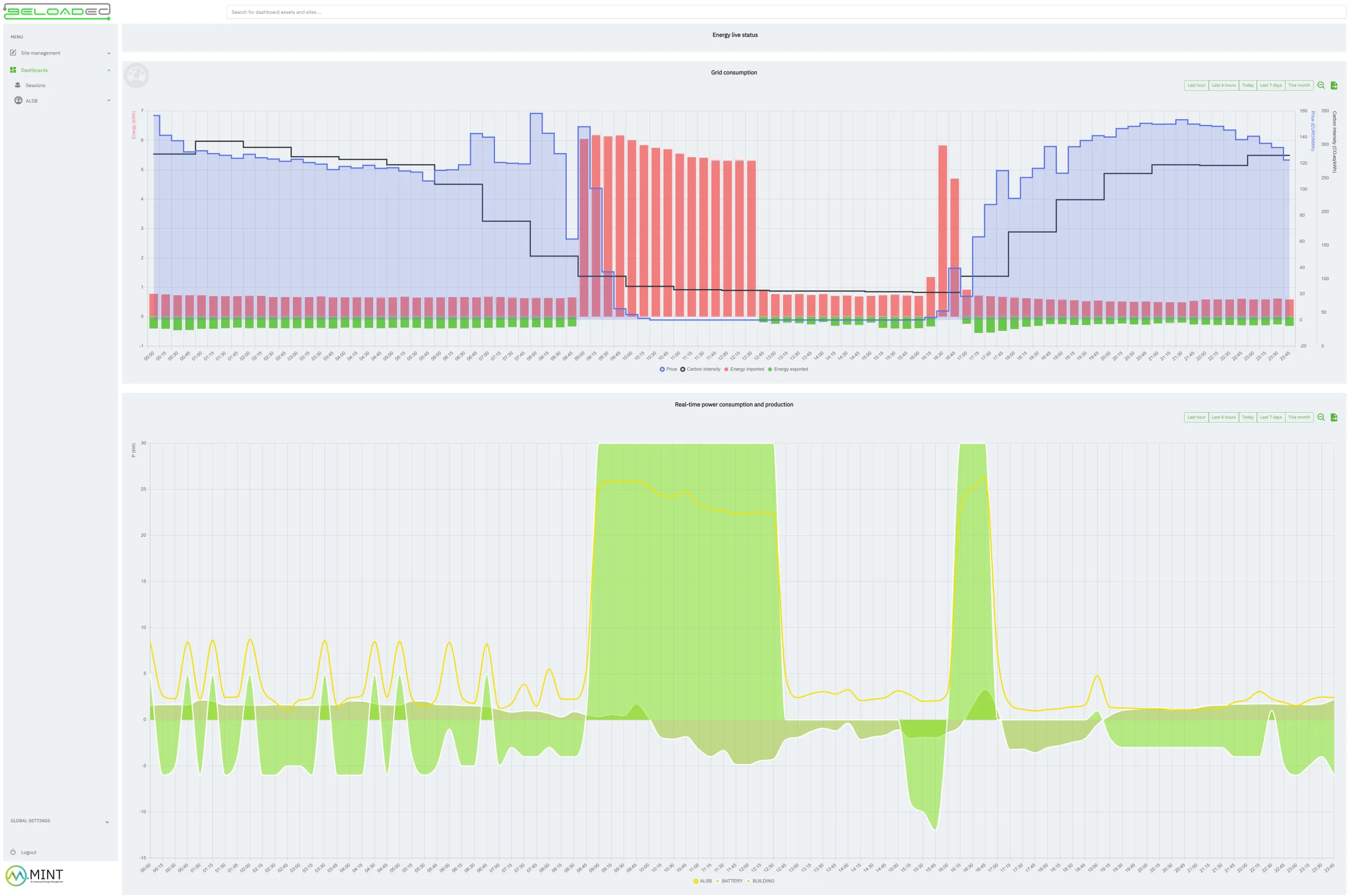
- A company battery charges in cheap or negative quarter-hours and discharges during the expensive evening. This is called energy arbitrage.
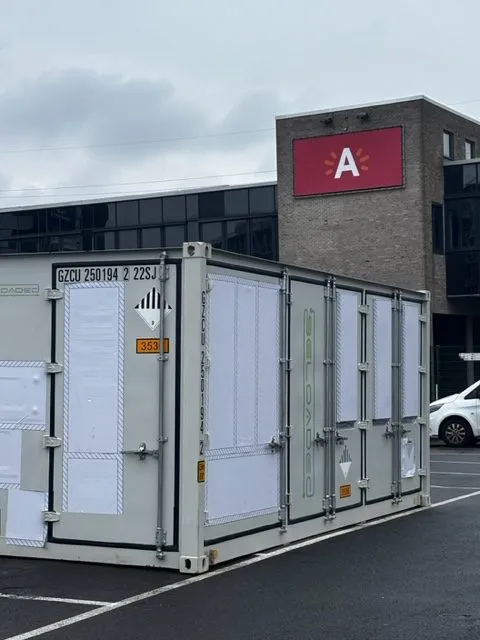
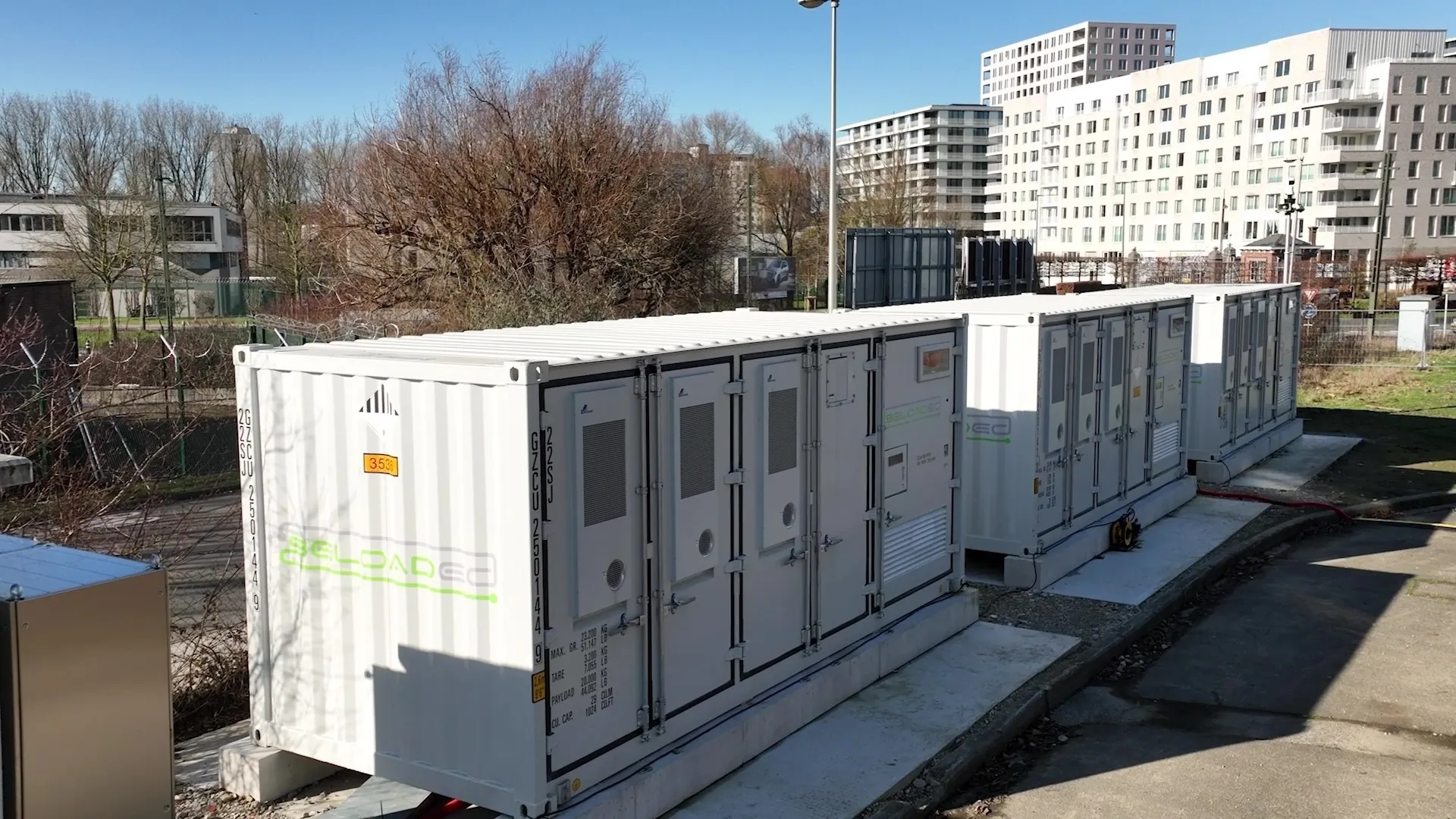
BeLoaded uses this logic in several projects. In Puurs, the battery charges at the lowest possible cost or from surplus solar power, to make each EV charging session more profitable. At the logistics site in Antwerp, the battery means own solar power is no longer injected and grid power is bought at the lowest market rate.
Checklist: is this for you?
- You have a digital meter with quarter-hour data, or an AMR meter
- Part of your consumption can move by a few hours without hurting operations
- You charge EVs on site, or plan to
- You have solar panels and often inject at low prices
- You have, or are considering, a battery or an EMS
- You can accept a less predictable monthly energy bill
Next step
Check first whether your profile suits a dynamic price. Do the free quick check to see how much of your consumption could shift. Then discover how our energy management system reads tomorrow’s prices and steers your loads and battery automatically.
Sources
- SDAC – 15-minute MTU in SDAC was implemented (PDF, 1 October 2025)
- Test Achats – Comment fonctionne la tarification dynamique en Belgique ?
- VRT NWS – Prijs van elektriciteit dook 520 uur onder nul in 2025 (CREG data)
- Callmepower – Welke leveranciers bieden een dynamisch contract aan?
- Solar Magazine – VNR: dynamisch energiecontract nog altijd goedkoopst
- Fluvius – Capaciteitstarief
Updated: 29 October 2026