In short
Negative electricity prices are no longer a strange exception in Belgium. They happen on dozens of days a year, mostly when the sun shines and demand is low. For a company with solar panels, they can turn injection into a cost. For a company that can move its consumption or store energy, they are a chance to buy power very cheaply. This guide explains why it happens, how often, and what you can do about it.
What is a negative electricity price?
Electricity for the next day is traded on the day-ahead market, the wholesale auction where buyers and sellers set a price for every period of the next day. In Belgium this auction runs on EPEX SPOT, the power exchange.
A negative electricity price means the price for a period is below zero. Producers pay to deliver power to the grid, and buyers receive money for taking it.
Since 1 October 2025 the day-ahead market sets a price for every quarter-hour instead of every hour. That makes price signals sharper: a negative period can now last only 15 minutes.
Why do prices go negative in Belgium?
Prices drop below zero when supply is much larger than demand and producers do not stop in time. Three things usually come together:
- A lot of solar power. Solar panels produce most around midday. CREG reports that solar production in Belgium grew by 1.85 TWh in 2025.
- Low demand. On weekends and public holidays, offices, factories and shops use far less electricity.
- Producers that keep running. Some power plants are expensive to stop and restart. Some installations still earn support per MWh produced. Many small solar systems do not react to prices at all.
BeLoaded follows these days closely. On 1 May 2026 the Belgian price fell to –498.76 €/MWh around midday, with about eight hours of negative prices. In the evening, when gas plants set the price again, it rose to 235.89 €/MWh. That gap between noon and evening is exactly where flexibility earns money.
How often does it happen?
According to the federal regulator CREG, the Belgian day-ahead price was negative for about 520 hours in 2025. That is 27.5% more than in 2024 and roughly 6% of the year. The Netherlands (581 hours), Germany (575 hours) and France (509 hours) saw the same trend.
The cause is structural: more solar and wind capacity is added every year, while demand does not follow the weather. So you should expect negative prices to stay a regular part of the Belgian market, especially from April to September.
Who feels negative prices, and how?
Whether a negative price helps or hurts you depends on your contract and your site.
| Your situation | Effect of a negative price |
|---|---|
| Fixed-price supply contract | No direct effect on what you pay per kWh |
| Variable contract based on a monthly average | Small effect, averaged out over the month |
| Dynamic contract for offtake | Energy part becomes very cheap or negative; grid fees and taxes still apply |
| Solar panels with an injection price linked to the day-ahead price | You may pay for every kWh you inject during those periods |
| Battery or flexible loads with an energy management system | You can charge or consume at the lowest prices and avoid injecting |
One point is often misunderstood. A negative wholesale price does not mean your total bill per kWh is negative. Grid tariffs, levies and taxes still apply to what you take from the grid. Many company supply contracts also contain specific clauses on negative prices. Check yours before you plan around them.
What can your company do?
There are three practical answers. Most sites combine them.
- Curtail. PV curtailment means you deliberately lower your solar output during negative prices. A good set-up does not switch the panels off. It limits production to what your site uses, so you keep your self-consumption and only stop the grid injection that would cost money.
- Shift. Move flexible consumption to cheap quarter-hours: charging electric vehicles, cooling and freezing, compressed air, heat pumps, hot water buffers. With a dynamic contract, this lowers your energy cost directly.
- Store. A company battery charges when prices are negative or very low and discharges when prices are high, usually in the evening. This is called energy arbitrage. It also stores your own solar surplus instead of injecting it.
Doing this by hand every weekend is not realistic. An energy management system reads the day-ahead prices, your solar production and your consumption, and steers inverters, chargers and the battery automatically.
There is one trap. If a battery and chargers all draw full power from the grid during a cheap quarter-hour, you can create a new 15-minute peak. That raises your capacity tariff — the part of your grid bill based on your highest 15-minute peak — or pushes you above your connection limit. The control system must respect both.
Example: a sunny Sunday in May
The numbers below are round and hypothetical. They show the mechanism, not a forecast.
A company has 500 kWp of solar panels and an injection price linked to the day-ahead market. On a sunny Sunday the site itself uses only 50 kW. For five hours around noon the price averages –50 €/MWh.
- Without action: the site injects about 350 kW for five hours, or 1.75 MWh. At –50 €/MWh, the company pays about €88 to inject that energy.
- With curtailment: the inverters are limited to the site’s own use during those hours. Injection drops to almost zero, and so does the cost. Self-consumption stays the same.
- With a battery of 200 kW / 400 kWh: the battery first fills with 400 kWh of solar surplus. In the evening it covers the site’s consumption when the price is, say, 150 €/MWh. That avoids buying 0.4 MWh, worth about €60 in energy, plus the grid fees on that power.
On one day these amounts look small. Over dozens of negative-price days, and combined with peak shaving and self-consumption the rest of the year, they add up. Whether a battery pays off for your site depends on your full profile. Our guide on whether a business battery is worth it goes deeper.
What about the future?
The number of negative hours rose sharply from 2024 to 2025. More solar, more wind and a quarter-hour market point to more price swings, not fewer. At the same time, more batteries and flexible loads respond to these signals, which can soften the extremes. The safest assumption for a company is simple: prices will keep moving a lot within one day, and flexibility will keep its value.
You can see where this year’s swings come from on our page about electricity prices in Belgium.
Checklist
- Check whether your supply and injection contracts follow the day-ahead price, and what they say about negative prices.
- Look up how much your site injects on sunny weekends and holidays.
- Make sure your inverters can be curtailed remotely and that someone, or something, does it.
- List the loads you could move to midday: EV charging, cooling, heating, compressors.
- Watch your 15-minute peak so cheap charging does not raise your capacity tariff.
- If you consider a battery, have its value simulated on your real consumption and solar data.
Next step
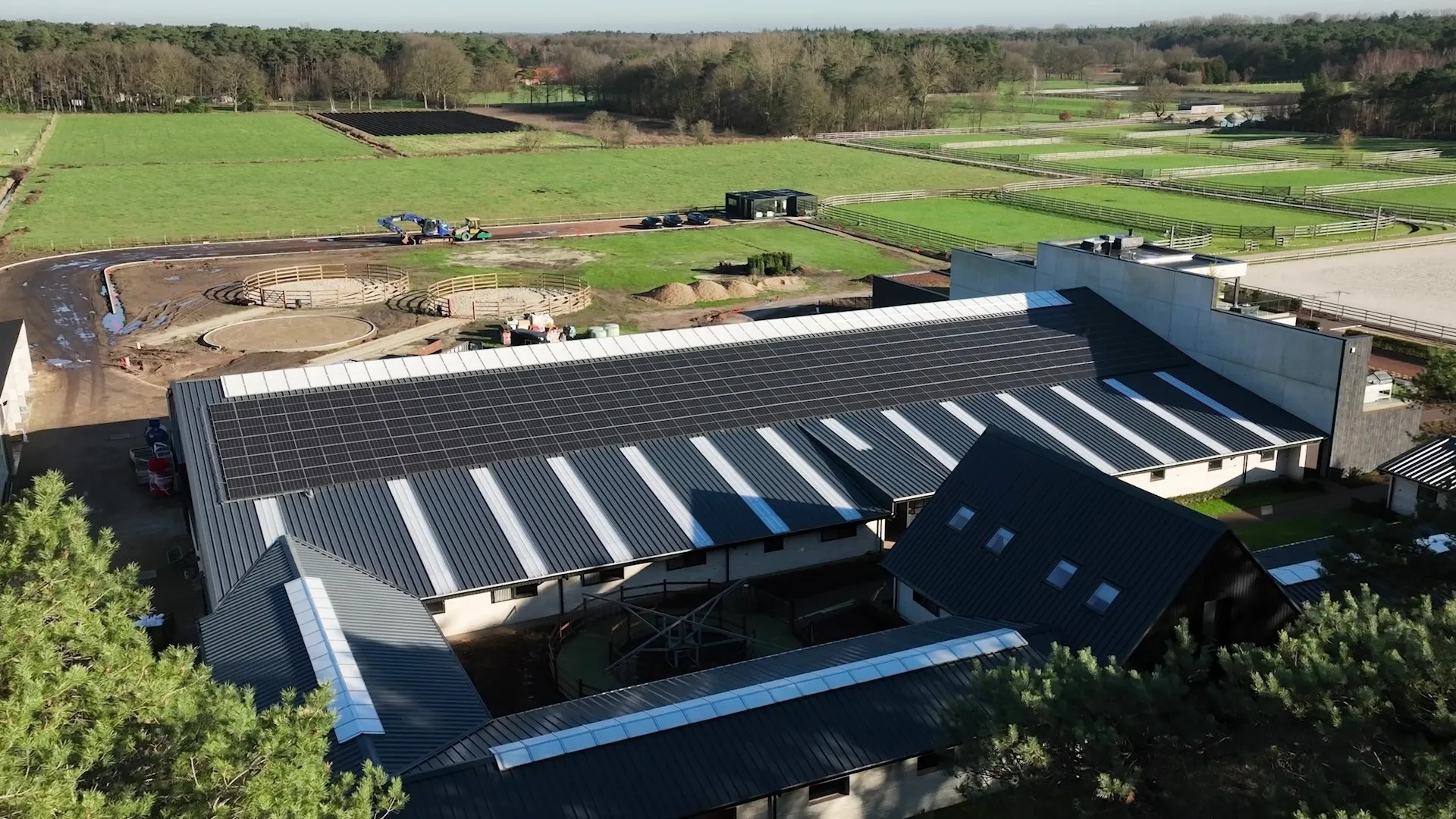
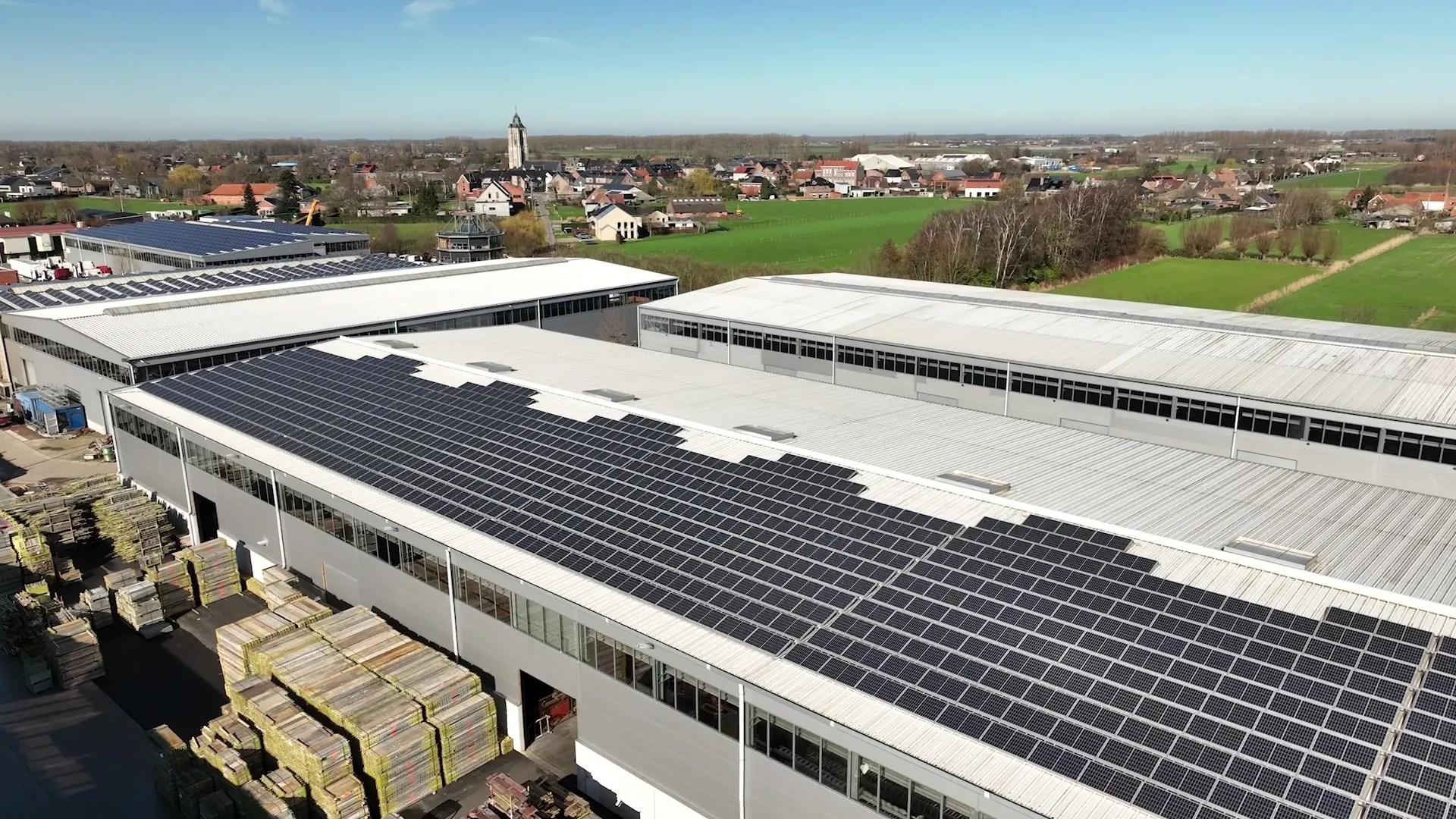
Negative prices are one piece of your site’s energy picture. Start with the quick check to see which levers fit your situation. If you have solar panels and inject a lot on sunny weekends, read how PV curtailment protects you from paying to inject, and how a battery can store that energy for later instead. Projects such as Herentals and Zandhoven show what this looks like on a real site.
Sources
- CREG – Note (Z)3151 on notable developments on the Belgian wholesale markets in 2025
- CREG – Note (Z)3151, full text (PDF)
- NEMO Committee – Go-live of the 15-minute market time unit in day-ahead coupling (SDAC)
- Fluvius – Capacity tariff on your bill
Updated: 29 October 2026