Free electricity this weekend — what will you do with it? | BeLoaded
BeLoaded · Energy insights 27 April 2026
Energy market · Analysis
Free electricity this
weekend — and what will
you do with it?
This weekend, electricity prices on the Belgian wholesale market plunged deep into negative territory once again. While most households barely noticed, the phenomenon shows how fundamentally the energy market is changing — and why a smart battery is no longer a luxury.
<0€
Price per MWh for several hours this weekend
600+
Negative-price hours expected in 2025–2026
3×
More negative hours by 2026 vs. 2023
What are negative electricity prices?
Anyone following the exchange closely this weekend saw something striking: the EPEX spot price — the wholesale price for electricity in Belgium — at times dropped far below zero. In practical terms, this means electricity producers paid to put their power on the grid, while large consumers could get paid to consume more.
It sounds paradoxical, but the cause is simple: this weekend there was structurally more electricity available than was being consumed. A sunny and windy spring weekend — little industrial activity, lots of solar panels and wind turbines running at full capacity — is the perfect recipe for oversupply.
“On a sunny day with plenty of wind, supply can be so large that hourly prices on the wholesale market turn negative. Producers then have to pay to inject, and consumers get paid to consume.”
Typical weekend — spot price profile
6am–9am
+45 €/MWh
9am–11am
+10 €/MWh
11am–3pm
− 30 €/MWh
3pm–5pm
− 15 €/MWh
5pm–9pm
+30 €/MWh
9pm–12am
+60 €/MWh
Schematic representation based on typical day-ahead prices. Red bar = negative price.
A growing phenomenon in Belgium
What used to be rare is becoming increasingly common. In 2023, Belgium still had 314 negative hours on the EPEX market. In 2024 that rose to 458 hours — a jump of more than 40%. Analysts estimate that the number of negative hours in 2025–2026 could exceed 600, and that is not even the ceiling.
The cause is structural: Europe is installing new solar and wind capacity at a rapid pace. That production depends on the weather and does not follow the rhythm of consumption. Weekends and public holidays are particularly sensitive: industry runs at a lower level while the sun and wind keep working.
On top of that, since October 2025 the Belgian EPEX market has been working with quarter-hour prices instead of hourly prices. That makes the price signal even more precise — and volatility even greater.
Who benefits? And who doesn’t?
The honest truth is that most Belgians noticed nothing of the negative prices this weekend. With a fixed or variable contract, you pay based on averages — the peaks and troughs are smoothed out. Only those with a dynamic energy contract see the hourly price reflected directly on their bill.
Who reaps the benefits of negative prices?
Fixed contract
No effect The price is fixed, regardless of market movements.
Variable contract
Hardly any effect The monthly average moves, negative hours are averaged out.
Dynamic contract
Potential benefit You pay the market price per hour — during negative hours you consume for free or get paid.
Dynamic + battery
Maximum benefit Charge during negative hours, discharge during peak prices. The best of both worlds.
The battery as a silent money machine
A smart home battery links two powerful mechanisms: first, it can store cheap or free electricity when the market is flooded — exactly as it was this weekend. Second, it releases that stored energy at the moment prices peak, usually in the evening.
Without a battery, this weekend’s cheap electricity literally passes you by. With a battery and a dynamic contract, your system can automatically respond to those price differences, day and night, without you having to think about it.
For companies and organisations with heavy electricity consumption — production sites, charging parks, wholesalers — the calculation is even clearer. The spread between negative hours during the day and positive hours in the evening can reach 60, 80 or even more than 100 euros per megawatt hour. Those who can arbitrage that fluctuation structurally lower their energy costs.
BeLoaded: the battery partner for companies and organisations
BeLoaded, based in Antwerp, is the exclusive distributor of Zetara batteries in Belgium and offers integrated solutions for energy storage, charging infrastructure and grid balancing. Through a partnership with Centrica, BeLoaded is active in the Belgian smart grid ecosystem.
At the heart of every BeLoaded installation is its own Energy Management System (EMS), which continuously analyses solar generation, consumption data and market prices to determine when charging, discharging or trading delivers the best return.
- Mono Block batteries of 125 and 260 kWh — ideal for SMEs and retail premises
- Modular systems from 200 to 2,000 kWh for industrial applications
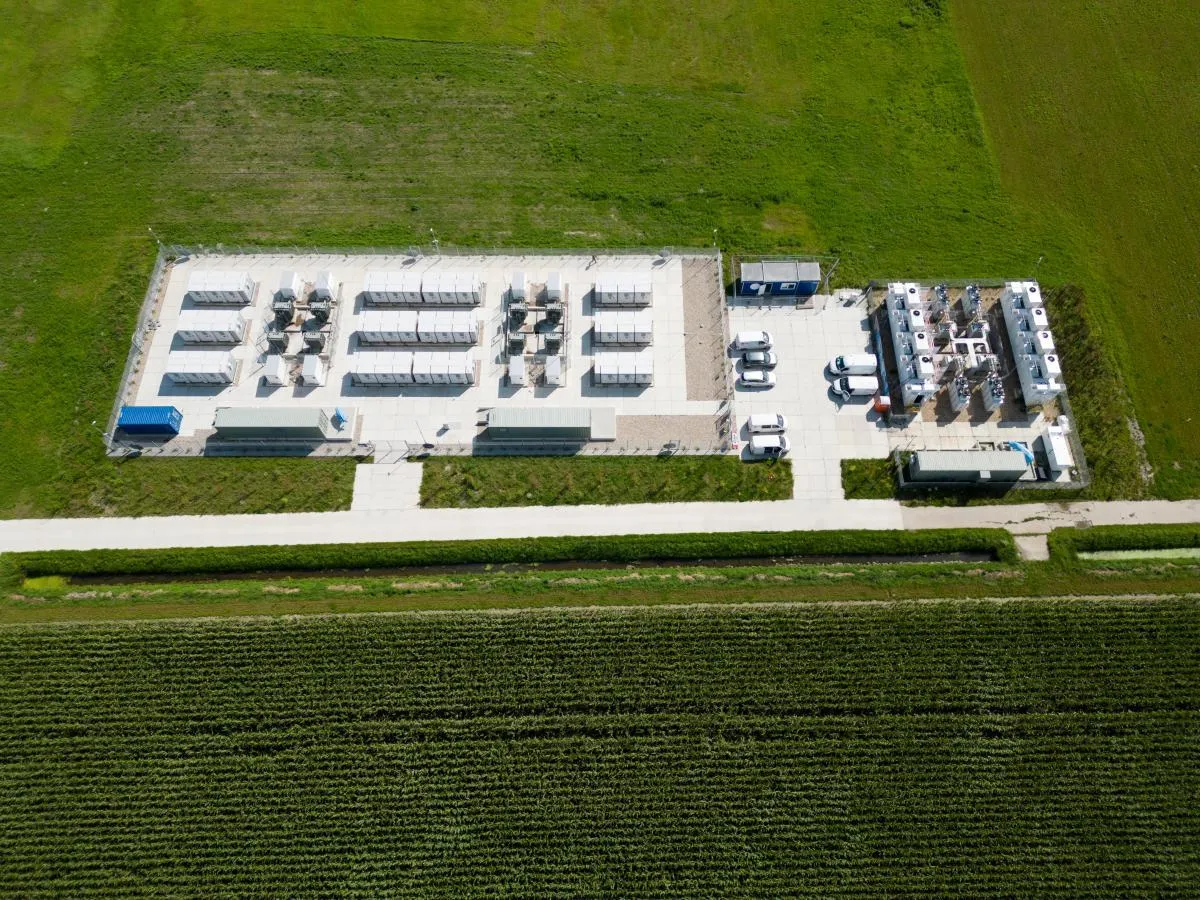
- Container solutions of 1, 2 and 5 MWh for large sites and charging parks
- Integrated EMS control that factors in dynamic tariffs and grid balance in real time
- A complete, hassle-free service: from engineering and permits to commissioning and monitoring
What does this mean for the future?
Negative prices are not an incident — they are a symptom of the energy transition. As more renewable capacity is added and electricity demand rises due to electric cars and heat pumps, price fluctuations will increase. Not decrease.
Experts estimate that the number of negative hours will continue to grow towards 2030, while peaks during periods of scarcity may also become higher. The energy market increasingly rewards those who are flexible: those who can charge when there is too much, and discharge when there is too little.
That is exactly the playing field where a smart battery solution makes the difference. Not as a gadget, but as infrastructure that fundamentally increases the value of your grid connection.
A battery system is no longer a cost item today — it is an instrument for turning the volatility of the energy market into returns.
This weekend was a wake-up call. The question is not whether negative prices will return. The question is whether you are ready for them.
Ready to benefit from the energy market?
Discover which BeLoaded battery system suits your situation — from SME to industrial site.
© 2026 BeLoaded BV · Desguinlei 6, 2018 Antwerp · beloaded.be